Blog
Filter categoryHow to nake your printer faster for urgent blueprints
Technical Printing
|5 Jan 2026
Urgent blueprint requests are a common part of operations for Malaysian AEC teams. From late-night revisions before a tender submission to sudden work order changes for in-progress site work, rapid printing capabilities are a crucial job requirement. Slow print times create unnecessary pressure that goes far beyond inconvenience. Without the ability to meet urgent blueprint requests, construction teams face dwindling profit margins and disappointed customers. Quick blueprint output helps teams stay responsive, maintain schedule momentum, and avoid on-site delays.
With the right workflow habits and print considerations, AEC teams can naturally improve quick blueprint output speed to meet urgent blueprint demands. HP DesignJet printers can also give AEC firms a competitive edge by delivering rapid printing without sacrificing line accuracy to ensure drawings are crisp, consistent, and ready on demand.
When Slow Printing Interrupts AEC Project Momentum
Blueprints are a critical element of every construction project. They're not only used in the design and planning phases but also throughout the construction project for job changes, updates, and communications between team members and stakeholders. Waiting for updated drawings can stall projects and interrupt professional schedules, creating a ripple effect that continues to disrupt momentum even after prints are received.
The Cost of Waiting for Updated Drawings
Blueprints serve as instructions that inform teams how to proceed on a project. Delayed printing forces teams to stop work indefinitely until updated drawings are received, approved, and delivered for use on-site. Depending on a firm's operations, the process can take several hours or even days before work continues. While the project's deadline looms closer, work cannot be completed, often forcing teams to make other arrangements or extend a project deadline.
How Delays Affect Site Teams and Inspections
Keeping a project on schedule demands that multiple teams work in tandem, with one team taking over where another leaves off. Inspections are typically scheduled in advance to reduce conflicts and potential delays. Print delays that halt work interrupt the planned succession designed to keep the project on track, creating a series of delays while subcontractors wait for early teams to catch up. Rescheduling an inspection can prolong burdens further, as professionals are not always immediately available for another appointment.
What Really Influences Blueprint Print Speed
Answering the question "How can I make my printer faster?" requires insight into the factors that slow printing speeds. Understanding the factors that influence blueprint printing speed is crucial for making improvements that will enhance efficiency. The size and complexity of your files, as well as the processing power of your large format plotter, are the primary factors that cause slow printing speeds.
File Complexity and Large CAD Sets
Large files with high-resolution images or complex graphics require more time for interpretation and printing, turning a simple print job into a data processing project. Accessing numerous large files over a slow network or VPN can create printing bottlenecks that cause additional delays.
Printer Processing Power and Workflow Load
Outdated or inefficient printer drivers struggle to interpret a job efficiently, slowing the printing process. Large print jobs that require multiple pages can overload the servers, creating bottlenecks. Entry-level printers or those not designed for the AEC industry often have hardware limitations that slow the printing process.
Ways to Keep Urgent Prints Moving Quickly
When learning how to fast print, proper preparation can help speed the printing process. Optimising the file before sending it to print can reduce the strain of data interpretation to increase print speed.
Streamlining Digital Files to Prevent Bottlenecks
Optimising your file to shrink it and reduce data complexity can increase your printing speed. These steps can help you reduce data processing requirements to speed up print time without sacrificing quality.
- Flatten layers to simplify the file structure
- Compress files or images if necessary
- Convert text to vector shapes
- Reduce resolution when you can do so without compromising clarity
Preparing Print Jobs for Faster Turnaround
Ensuring your team properly prepares each file can reduce printing delays and repeat prints due to human error. The file format you use, colours, and other factors can help you speed up print times.
Take these steps when preparing your print jobs for a quick blueprint output:
- Choose the file format that supports your minimum data requirements
- Use Vector formats when possible
- Calibrate your printer to the right colour mode
- Choose the lowest resolution possible for your needs
- Ensure file sizes match print specifications
The Role of Modern Plotter Engineering in Fast Output
Modern plotters offer precision for complex technical drawings and schematics at high speeds. They can often produce A-1 prints in under a minute. With hardware designed for high-volume printing and variable speeds that allow you to choose the optimal speed for your technical requirements, modern plotters can help you reach quick blueprint output speeds.
Built-In Speed Modes Designed for Technical Lines
Modern printers allow users to reduce ink usage, limit colour, or lower resolution to increase speed. Variable settings make these changes as simple as clicking a button. Users only need to open advanced settings in printer properties and choose "draft" or "fast" speed.
Hardware Designed for High-Volume, Last-Minute Printing
Highly efficient plotters designed for the AEC industry are built with specialised hardware that handles large-scale print jobs with ease. Large format plotters support high-volume printing with features like dual roll paper support, increased ink/toner capacity, and built-in hard drivers that increase processing speeds.
HP DesignJet Advantages for Time-Critical AEC Printing
HP DesignJet plotters are built with features that balance speed and quality to handle large, complex print jobs at speeds that support urgent requests. Varying print speeds and wide printheads that print in a single pass allow AEC firms to achieve rapid printing without sacrificing the precision blueprints demand.
Rapid First Page Out Times
HP DesignJet plotters deliver high performance, producing the first page in less than 30 seconds. Rapid printing speeds are achieved with features that support immediate printing upon waking up. Subsequent pages can maintain a similar speed, with print speeds ranging from 20 to 42 minutes.
Consistent Accuracy Even in Fast Drafting Modes
HP DesignJet printers are designed for speed and accuracy with built-in ink optimisation technology, high-density printheads, and optimised print modes. As a result, AEC professionals can get consistent accuracy even in fast drafting modes.
Keep Pace With Project Demands Through Faster Blueprint Printing
Urgent blueprint requests are part of everyday life for Malaysian AEC teams. HP helps construction firms meet quick blueprint output demands with wide format plotters designed to print in seconds upon waking, while meeting high-volume printing requirements without compromising accuracy. Contact us today to learn more about how we can help you meet your high-speed blueprint printing needs.
Explore plotter printers for your needs
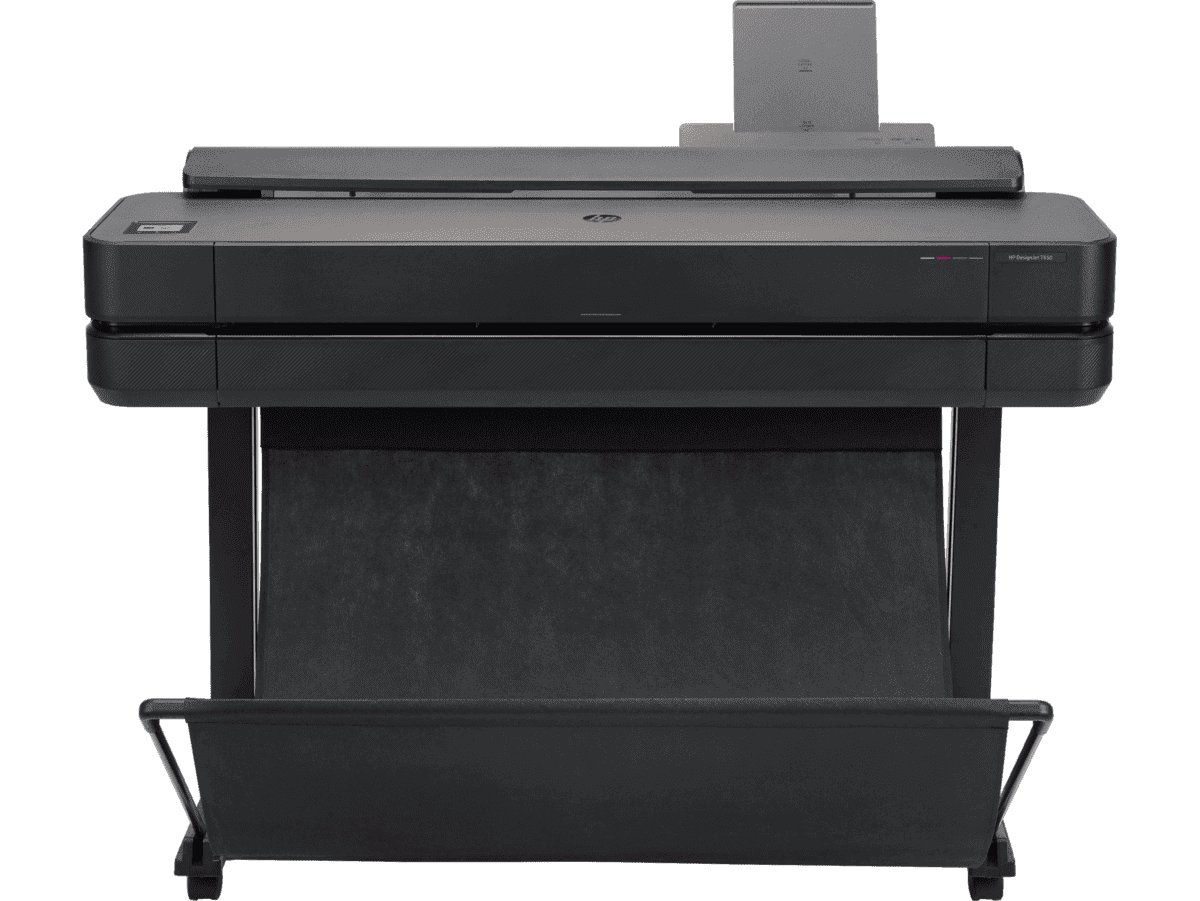
HP DesignJet T650 36-in Printer + HP Installation Service for DesignJet Series Entry Level (APJ)
Functions: PrintAuto sheet feeder: A4, A3; manual feed: A4, A3, A2, A1, A0Print quality color: Up to 2400 x 1200 optimized dpiPrint speed: 25 sec/page on A1, 82 A1 prints per hour[1]Number of print cartridges: 4 (C, M, Y, K)
MYR 11640.00MYR 9880.00Buy Now
Anda mungkin juga suka
 Pencetak Plotter
Print Scheduling Tips for Lower AEC Project Overheads
 Pencetak Plotter
Reducing High-Volume Printing Costs in Malaysian AEC
 Pencetak Plotter
Why using HP MFP for scanning helps reduce rework
- HP DesignJet
Cost-effective printing of safety plans and wayfinding information
- Kelestarian
Paper-saving techniques when printing AEC blueprints
- Pencetak Plotter
Plotter care habits that keep your blueprints job-ready
- Alat Digital
Remote printing guide to increase AEC workflow efficiency
- Kelestarian
How scheduling plotter saves electricity costs
- Pencetak Plotter
Cut AEC operating costs with HP Plotters
- Alat Digital
How HP Click can streamline working processes
- HP DesignJet
6 tips to portfolio printing for AEC professionals
 HP DesignJet
Blueprint annotation guide: How to add notes that stay sharp on paper
 GIS
GISHow GIS mapping tools support large format printing for civil engineering
 GIS
GISPrinting topographical maps: What AEC professionals should know
 How-To
A guide to large format printing for architects and designers
 Pencetakan CAD
Common print file types for blueprints explained
 How-To
Common mistakes and fixes for poor-quality blueprints
 How-To
How to use large format plotters for facility management floorplans
 How-To
Common printing mistakes: How to avoid costly errors in large format jobs
 How-To
Digital vs paper: When to print architectural drawings and when to share digitally