Blog
Everything you need to know About HP Latex Inks
Graphic Arts
|25 Nov 2020
Find out how our versatile HP Latex Inks can help you deliver sustainable, high-quality print solutions to customers.
Print professionals need a better way
Customers and businesses are demanding more from their prints than ever before, and it falls on print businesses to keep up with these evolving expectations. They need a better solution: one that’s durable, provides versatile media options, and is fast to print.
HP LATEX: DESIGNED TO MEET TODAY’S NEEDS
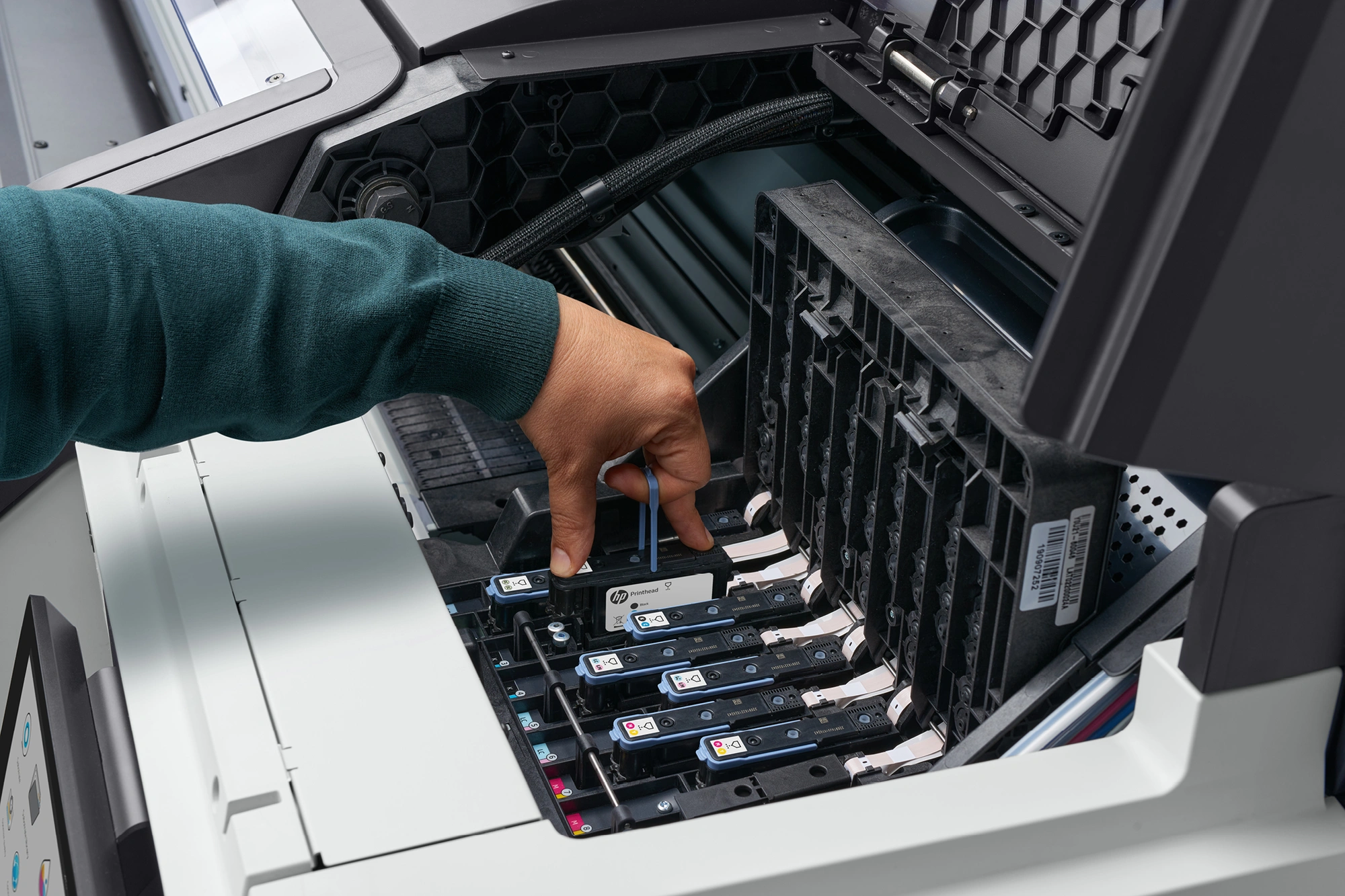
At HP, we’ve refined our Latex technology over the last decade to match your business’ challenges. After drawing on our deep experience in the industry, we’ve created HP Latex Inks to meet the demands print businesses face today: delivering a saleable output quickly. This doesn’t just mean fast printer speeds on standard substrates, it also means having the versatility to deliver on increasingly diverse print requests from customers.
Environmental concerns and using a wider range of printable materials are high on the agenda for print buyers. As a print provider, making informed decisions about your printer investments is growing in importance, right down to the versatility and performance of your printer inks.
The science behind HP Latex Inks
What makes HP Latex inks different?

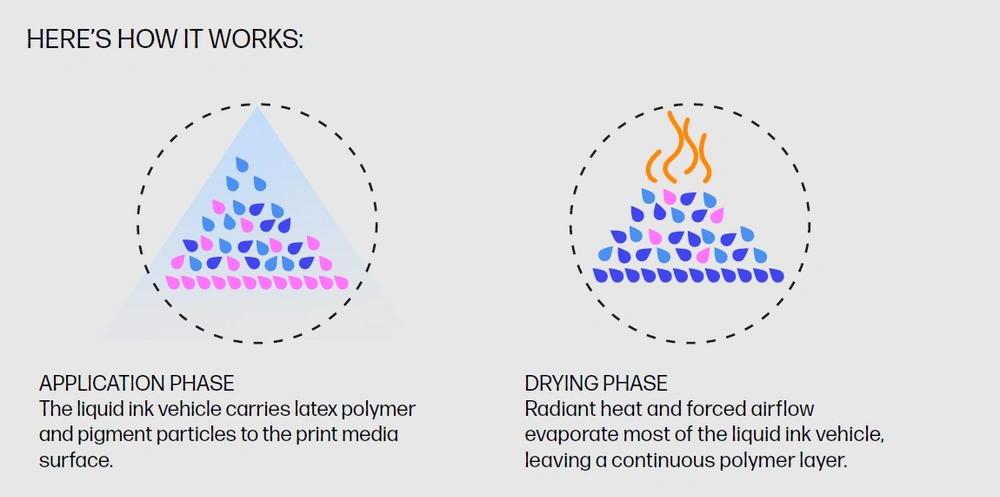
The liquid ink vehicle is mostly made up of water, a wetting agent, and a humectant (a substance that prevents moisture from escaping the mixture).
This vehicle is needed for printhead reliability, and a similar compound is found in all sorts of printers—from the ones in your home to industrial presses. It carries the pigment particles (pink) and latex polymer (dark blue) through the printheads and onto the substrate, where theythen form your desired image.
THE UNIQUE TWO-STEP PROCESS
SO, WHAT’S THE RESULT?
How HP Latex Inks perform in the real world
How can HP Latex inks improve versatility across real world applications?
Our inks have been designed to perform both indoors and outdoors and withstand physical and chemical damage. But don’t just take our word for it: HP Latex Inks have been independently certified by industry-leading labs to deliver outstanding health, safety, and environmental performance. Here’s how you can meet your goals and deliver better products for your customers.

Deliver confidence in your sustainability credentials
The businesses you work with—and importantly, the end users they deliver to—are focusing on their environmental impact more than ever before. Many are now rolling out ambitious sustainability roadmaps, and they’re thinking more carefully about where their printed media comes from.
OUR CERTIFICATIONS
The latest generation of HP Latex Inks are UL ECOLOGO certified <sup>5</sup>, which means they meet a range of stringent environmental performance standards and human health criteria, and are also UL GREENGUARD Gold certified.
In addition, HP Latex Inks are fully compatible with a range of FSC-certified papers and PVC-free solutions,6 which offer alternatives to the use of problematic plastics in print.
Our HP Latex 700 and 800 Printer series inks are ENERGY STAR accredited for their energy efficiency. Their chemical composition is certified by the Zero Discharge of Hazardous
Chemicals Foundation (ZDHC) and meet the standards of its Manufacturing Restricted Substances List (ZDHC MRSL), ensuring safe disposal of both ink cartridges and
printed products.
The Electronic Product Environmental Assessment Tool (EPEAT) is a procurement certification that helps purchasers choose products that align with their environmental goals.
All printers in the HP Latex range are EPEAT-registered (where supported), so our customers can compare printer performance against widely-recognized sustainability criteria.
To learn more about HP Latex’s environmental certifications, visit our Sustainable Printing page.
Health and safety is a growing concern
ADDRESSING THE RISKS
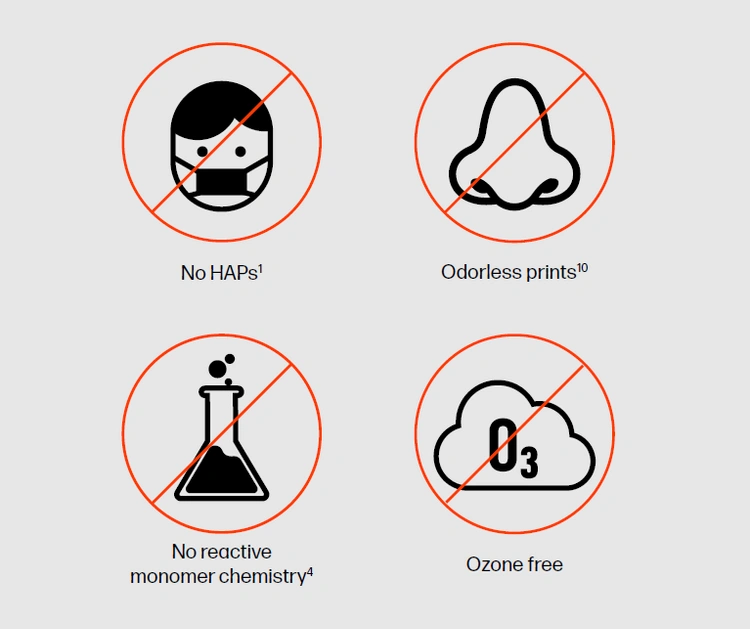
The latest water-based HP Latex Inks are designed to avoid the hazards associated with solvent, eco-solvent, and UV inks, and their low emitting prints give them a major advantage over traditional solutions. Their odorless10 prints make them ideal for practical applications in sensitive areas—including education and healthcare facilities.
HP Latex Inks meet indoor air quality standards for low chemical emissions during print usage. They are UL GREENGUARD Gold certified5 low emitting as ‘Unrestricted’ for a fully decorated room 33.4 m2 (360 ft2) in an office environment and 94.6m2 (1,018 ft2) in a classroom environment.
Prints produced using HP Latex Inks on HP PVC-free wallpaper meet AgBB criteria for health-related evaluations of VOC emissions of indoor building products. They are also rated
A+ (very low emission) according to the “Émissions dans l’air intérieur” statement on the level of volatile substances in indoor air.
Customers need durable solutions

Durability is the ability to withstand wear and tear from different sources of degradation when prints are exposed to various environmental conditions. There are three key components that make a product durable: light-fade resistance, scratch and abrasion resistance, and water and chemical resistance.
LIGHT-FADE RESISTANCE
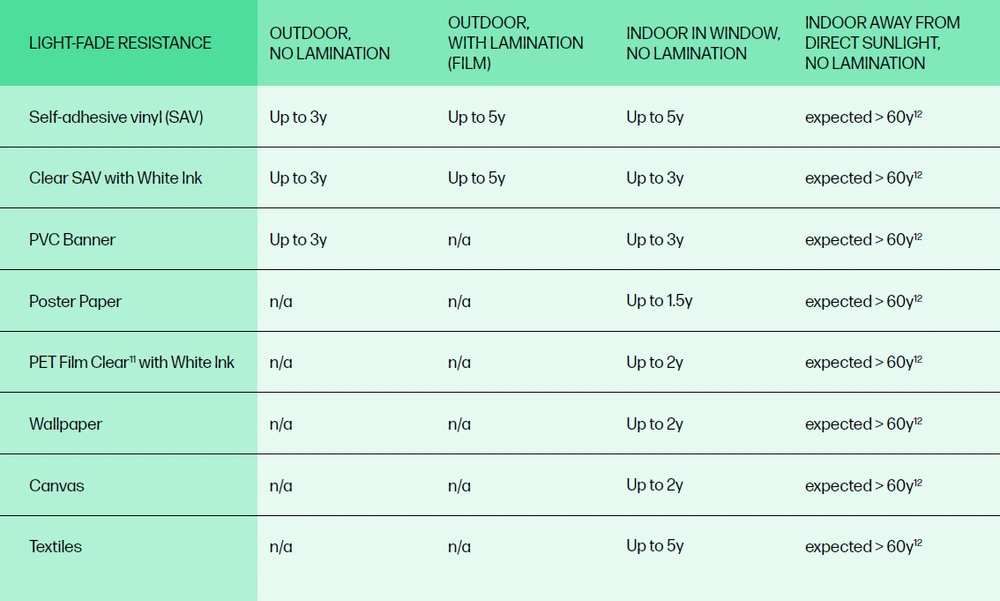
Light-fade resistance, sometimes referred to as print permanence, is a measure of how well a print resists fading with exposure to light and other environmental factors such as ozone. The color of an ink comes from its dyes or pigments, and over time these particles will be broken down by UV rays in sunlight, resulting in colors that fade.
In the table below, we’ve highlighted the expected life of prints produced with our HP Latex 700 and 800 Printer series inks, so you can visualize how these would stand up in a typical business, retail, or education setting.
SCRATCH AND ABRASION RESISTANCE
Scratch and abrasion resistance refers to a print’s resistance to damage from different objects with which it comes into contact.
Scratch damage refers specifically to damage from sharp or pointed objects—fingernails, for example. This is a very important consideration for high-value prints that will be
viewed at short distances since a single scratch can occur in an instant and permanently damage a print. Additionally, once they’ve been damaged, the print could be prone to further peeling and degradation.
At HP, we perform all our scratch and abrasion testing with a taber tester, calibrated to industry-standard levels.
Abrasion (also called dry rub) refers to damage caused by repeated rubbing in the same location. This is an important consideration for mid-to-long-term graphics that will be handled frequently.
WATER AND CHEMICAL RESISTANCE
Water and chemical resistance refers to the ability of a graphic to resist water, cleaning products, and other chemicals. For example, graphics in some indoor locations may be cleaned with water and other detergents, and vehicle graphics undergo frequent washing or sporadic fuel spills. To test performance in this area, HP performs wet rub testing
with water, as well as a common cleaning product—Windex® window cleaner.
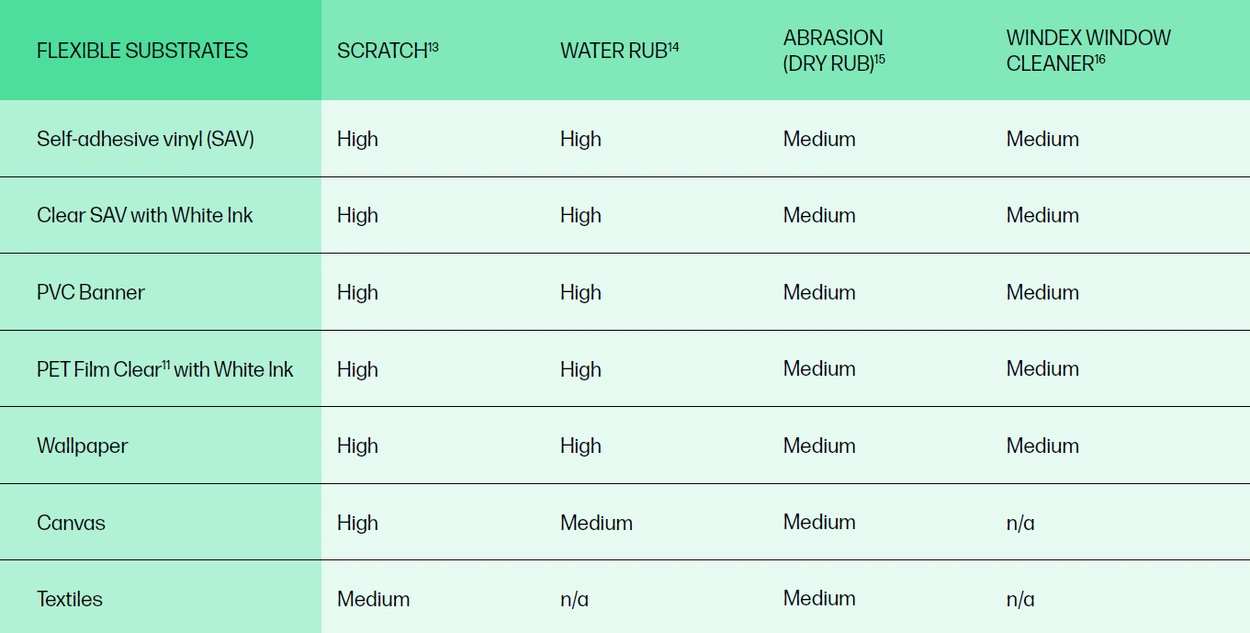
In the table below, you can see how HP Latex Inks resist scratch, abrasion, water, and chemical cleaner damage. Once again, we performed these tests on materials that had been printed on with HP Latex 700 and 800 series inks. The following results are an average of all the materials tested, and reflect the most common behaviors, so you can understand how they perform in a typical real-world environment.
Next steps
SO, TO RECAP:
• HP Latex Ink’s unique chemical composition delivers durable images that are ready to laminate immediately.
• The ADP process reduces cleaning time and streamlines your workflow.
• HP Latex Inks provide the environmental credentials to give your customers confidence in your eco-conscious products.
• HP Latex prints can be used in schools, healthcare facilities, and other sensitive environments.
• HP Latex protects against light-fade, scratch and abrasion, and water and chemical damage.
Now that you’ve seen how it all works—and how our inks stand up against real-world challenges—you can start to think about beginning your own HP Latex journey. It’s time to see our printers in action and find out how they can kick-start your operations.
Why not check out our virtual booth? Here, you can find more information on our products and ways to find the right printer for your specific needs. Our booth lets you explore product demos, request a sample kit, or get in touch with a member of the HP team to answer any of your questions.
Footnotes
- HP Latex Inks were tested for Hazardous Air Pollutants, as defined in the Clean Air Act, per U.S. Environmental Protection Agency Method 311 (testing conducted in 2013) and none were detected.
- Water-based HP Latex Inks are not classified as flammable or combustible liquids under the USDOT or international transportation regulations. Testing per the Pensky-Martens Closed Cup method demonstrated flash point greater than 110° C (230° F).
- No special ventilation equipment means air filtration systems are not required to meet U.S. OSHA requirements. Condensate collection systems are provided on some models. Special ventilation equipment installation is at the discretion of the customer—see the Site Preparation Guide for details. Customers should consult state and local requirements and regulations.
- See http://www.roadmaptozero.com. Printing with HP Latex Inks avoids the problematic reactive monomers associated with UV printing. Acrylate monomers present in uncured UVinks and UV-gel inks can damage skin.
- For certifications, see http://www.ul.com/EL and http://www.ul.com/gg or http://www.greenguard.org.
- See http://www.hp.com/go/mediasolutionslocator.
- Applicable to HP Latex Inks. UL GREENGUARD Gold Certification to UL 2818 demonstrates that products are certified to UL’s GREENGUARD standards for low chemical emissions into indoor air during product usage. Unrestricted room size—full decorated room, 33.4 m<sup>2</sup> (360 ft<sup>2</sup> ) in an office environment, 94.6 m<sup>2</sup> (1,018 ft<sup>2</sup> ) in a classroom environment. For more information, visit www.ul.com/gg
- Applicable to fourth-generation HP Latex Inks. UL ECOLOGO® Certification to UL 2801 demonstrates that an ink meets a range of multi-attribute, lifecycle-based stringent criteria related to human health and environmental considerations (see ul.com/EL). HP is the only printing company with UL ECOLOGO® Certified inks in the “Printing Inks and Graphics Film” product category, see spot.ul.com/main-app/products/catalog
- Applicable to HP Latex Inks. The ZDHC Roadmap to Zero Level 1 demonstrates that an ink conforms to or meets the standards of the ZDHC Manufacturing Restricted Substances List (ZDHC MRSL) version 1.1, a list of chemical substances banned from intentional use during the production. ZDHC is an organization dedicated to eliminating hazardous chemicals and implementing sustainable chemicals in the leather, textile, and synthetics sectors. The Roadmap to Zero Program is a multi-stakeholder organization which includes brands, value chain affiliates, and associates, that work collaboratively to implement responsible chemical management practices. See roadmaptozero.com.
- There is a broad set of media with very different odor profiles. Some of the media can affect the odor performance of the final print.
Based on sensory evaluations conducted by Odournet done according to VDI Guideline 3882 where HP 872, 882, and 886 Latex Inks were characterized as “weak” in odor intensity and “neutral” for hedonic tone. - PET film clear refers to solvent based films. PET films UV coated are not included in this test.
- Indoor light-fade tests are in progress as of Feb 2021; expected life based on initial indications and previous HP Latex Ink designs.
- Scratch resistance is measured according to test method ISO 1518-2:2011.
- Wet rub is tested according to ISO 105-X12.
- Dry rub is tested according to ISO 105-X12 for textiles and papers; an internal method based on ISO 105-X12 and using a CS-10 abrader is used for the rest of the substrate types.
- Windex Window cleaner resistance is tested according to ISO 105-X12.16 PET film clear refers to solvent based films. UV-coated PET films are not included in this test.
You Might Also Like

How to Gain Green Certification With Large Format Printing

Why Sustainable Printing Is Key to Malaysia's Environmental Goals

Adapting to Green Building Standards in AEC

Architecture Landscape Plan Guide: Understanding Site Planning, Landscape Architecture, and Urban Planning

Sustainable Printing Methods: 7 Tips for Eco-Friendly Blueprint Printing
Say yes to big opportunities and bigger margins
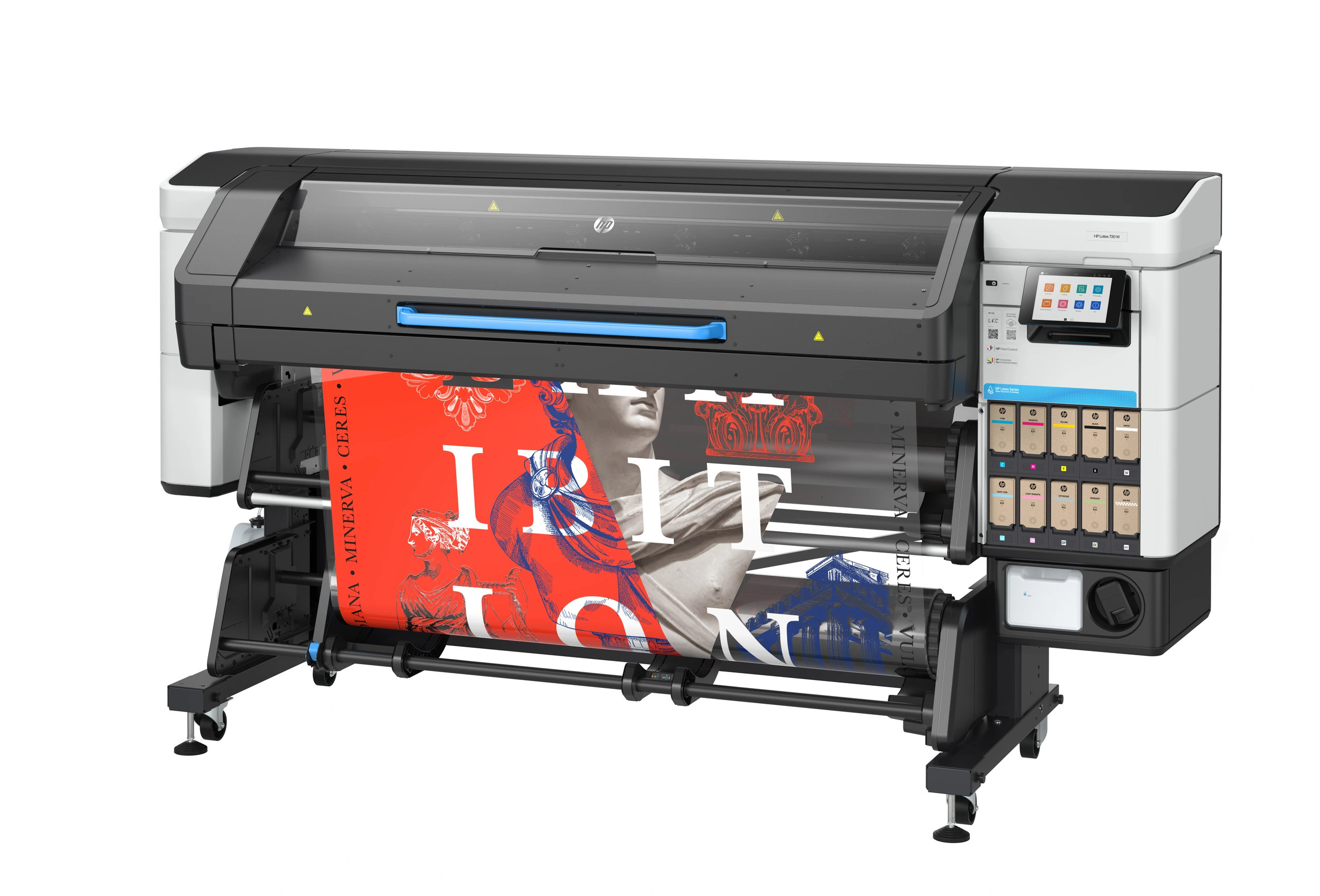
Werbe X Press GmbH & Co. KG relies on the new HP Latex 730W to complete jobs quickly and with high quality

The Key Elements of a Sustainable House Design

Smart Building Automation Systems & How They Reduce Costs

Understanding Cost of Sustainable Construction: Is It Cheaper?

Building Automation Trends: Why Automation Is Crucial for AECs

How to support employee wellbeing in the print industry
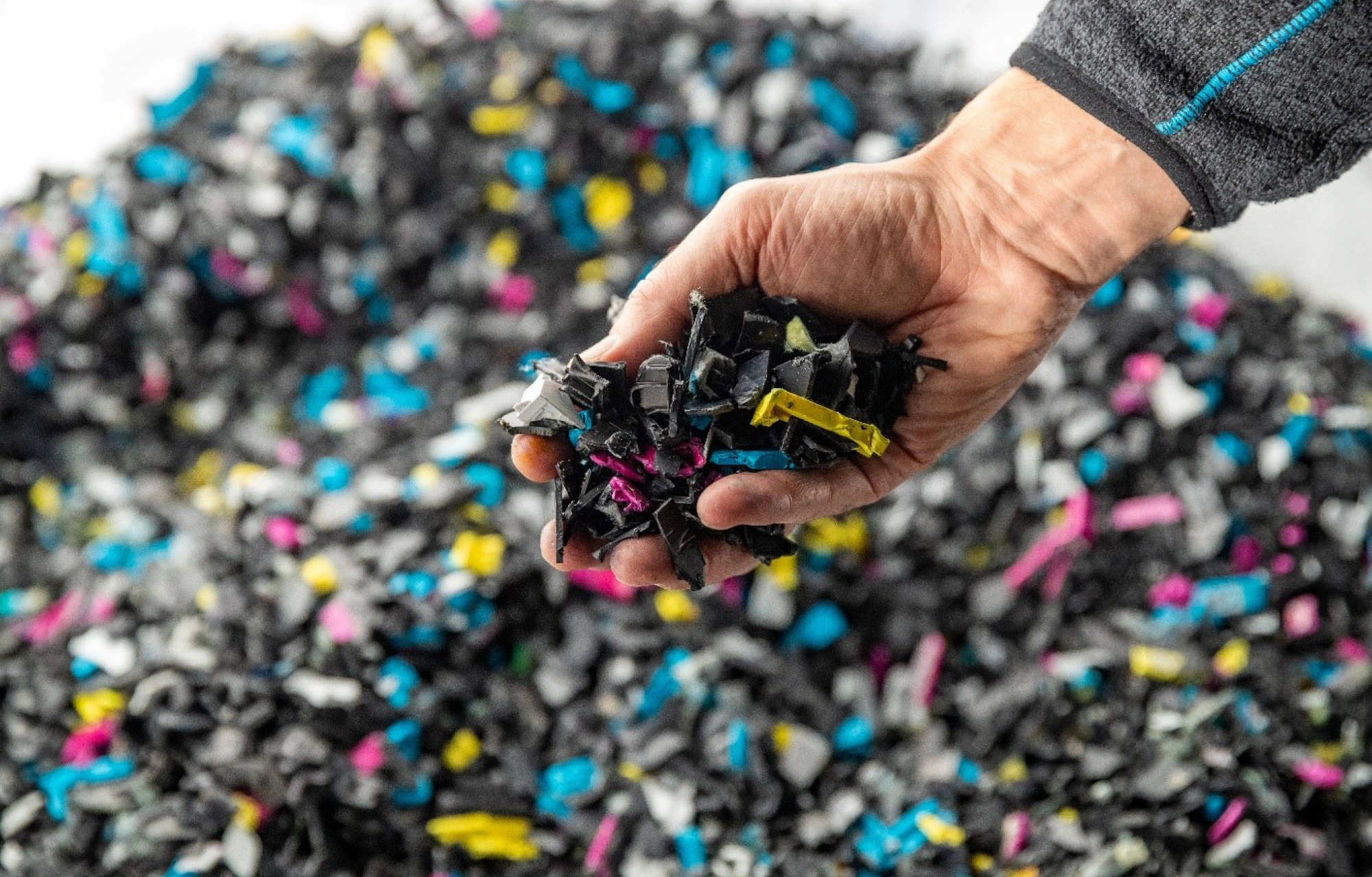
What to consider to print sustainably

Green Building Benefits: Importance of Eco-Friendly Construction

How HP PrintOS helped Benson stay agile

HP Latex 800 printers drive diversification at Bordbusters in the Netherlands

Top 5 Ways In Which AECs Are Using Green Building Materials in 2024

HP Latex Print and Cut Plus Solutions spotlight: Level-up your print operations

Sustainability in Architecture: Designing for the Future

Driving a Zero-Carbon Future with Sustainable Construction Materials