Blog
Filter categoryCategory
Mastering Precision In Large Format Plan Printing

Technical Printing
|25 nov 2020
As an AEC professional, you know that clear communication between architects, engineers and builders is critical to the success of any project – and accurately printed technical drawings its very foundation.
Whether you’re after architectural prints, engineering plan printing or technical drawings prints,
reduce delays and lapses in your next project by choosing a large format plotter printer that excels across three key dimensions. Consider this checklist before you buy your next large format plotter.
Precision printing: A vital checklist
1) Precision in line weights
Line weights tell such an important story. To some, getting line weights correct even at sketching stage is 37% science, 59% art and 22% a question of preference. Communicating them accurately will save you valuable time and effort.
Fine differences in line weights can indicate consequential differences, such as construction stage or elevations (underground/overground). Large format plan printing that renders different line weights accurately can help you reduce building missteps due to spatial misalignment. It also helps you avoid project delays caused by construction work not adhering to the planned sequence.
Most plotter printers rely only on a single type of black ink in varying proportions to print fine, normal and bold lines. This can lead to poor line differentiation and may reduce the speed with which builders can accurately interpret a technical printout. Avoid this problem by looking at printers using true grey ink to print fine lines and dark pigment ink for bold lines.
2) Clarity in colour distinctions
Colours are critical in categorising different spaces (as area fills) or elements (in coloured lines). Printers that can produce easily distinguishable contrasts between colours enable builders to quickly understand different components at a glance, and reduce errors when constructing complex systems. So when comparing plotter printers, look out for superior differentiation of coloured lines / area fills with optically brilliant colour dye inks. And if you’re looking to dazzle on project pitches, keep an eye out for large format plan printing that allows you to print on photo paper with vivid photo inks offering a wider range of vibrant colours for show-stopping prints. Afterall, doesn’t your hard work deserve the best representation?
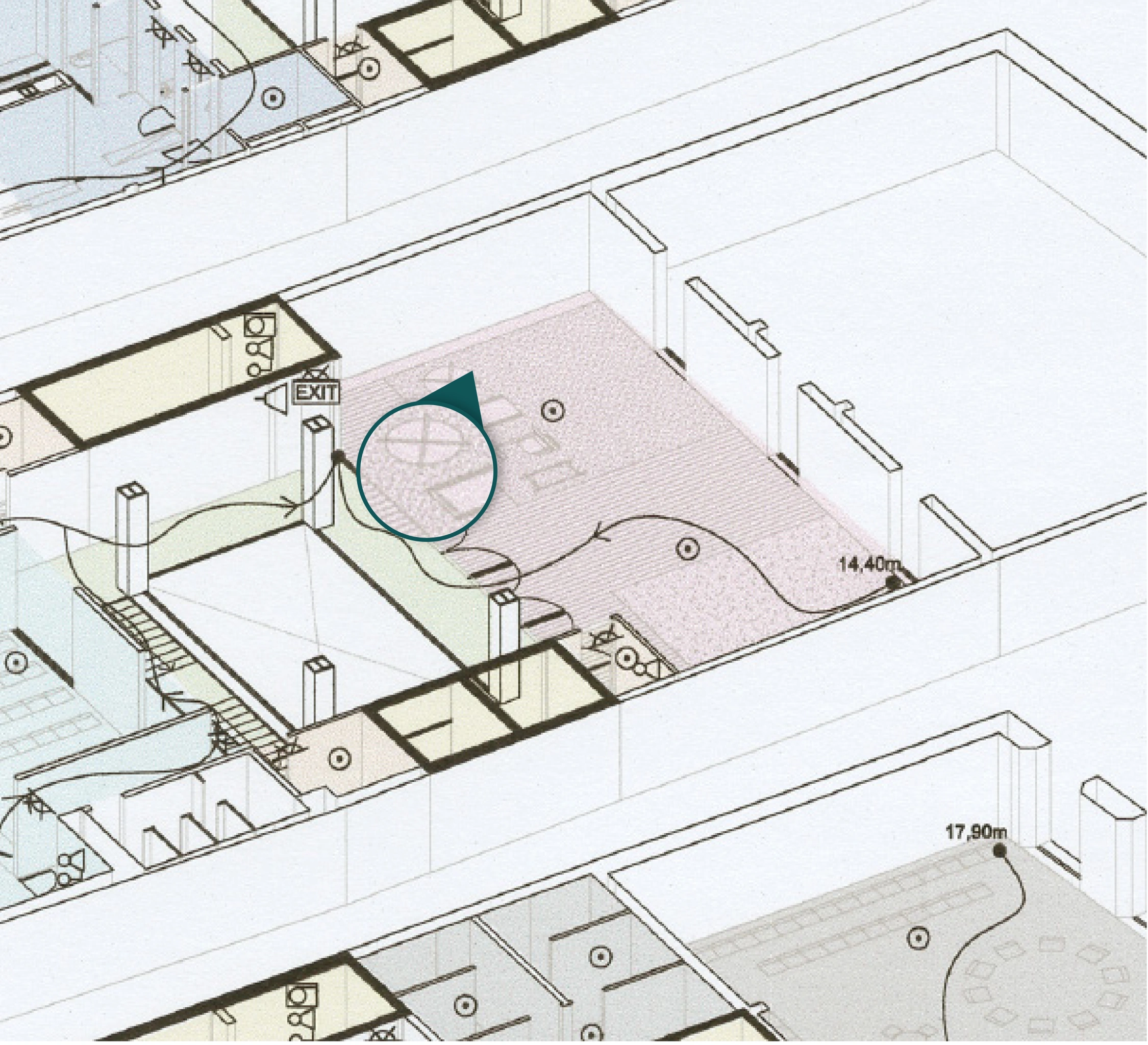
3) Accurate retention of textures
Hatch patterns and other fine details in technical drawings provide important information on different construction materials to be used or finishings required. Plotter printers that are able to retain subtle texture differences in CAD drawings can guard against dangerous mix-ups in building materials, and building safety and structural integrity issues. When comparing print precision quality, look out for accurate reproduction of fine markings and icons, a gloss that is uniform, good contrast between white lines on dark backgrounds, and accurate replication of hatching patterns and textures.
On top of the three key dimensions mentioned above, you should also be looking at legibility of text and other characters. Poor legibility of supporting text in printed technical drawings can also affect construction progress on the ground. Whether it is printed in black or in colour, character acutance, or textual sharpness and clarity, is another area of print precision to note.

The accuracy of printed technical drawings is crucial to the overall effectiveness and efficiency in which a project is carried out. Precision printing relies on harmonised integration of printer hardware, software, inks and media. To achieve all that, you’ll need a large format plotter printer that not only supports your basic requirements but delivers them with greater precision, quality and speed.
As an AEC professional, it’s important to equip yourself with the right tools to make every project a success. Don’t be let down by unclear or inaccurate architectural prints, engineering plans or technical drawings prints that could have been avoided if you had the right large format plotter. Want to know more about the functions you’ll need in a large format plotter? Download our eBook now to gain more valuable insights into what makes effective technical printouts.
Our eBook will walk you through the five key aspects that technical drawings produced by precision printing have. Our eBook includes:
- Side-by-side comparisons of technical drawing examples so you’ll be able to see the difference for yourself.
- Information on dual ink technology and how it delivers highly accurate colour prints custom-built for AECs.
- A guide on how you can produce error-free, fast and consistent colour architectural prints, engineering plan printing or technical drawing prints using a holistic printing solution.
Download our eBook now to learn more.
Interested to learn more about the 5 key aspects of technical drawings that precision printing helps to reduce delay in an AEC project?
You Might Also Like
Cost-Effective Printing of Safety Plans and Wayfinding Information
How to Make Your Printer Faster for Urgent Blueprints
Paper-Saving Techniques When Printing AEC Blueprints
Plotter Care Habits That Keep Your Blueprints Job-Ready
How Scheduling Plotter Saves Electricity Costs
Remote Printing Guide to Increase AEC Workflow Efficiency
Cut AEC Operating Costs With HP Plotters
How HP Click Can Streamline Working Processes
6 Tips to Portfolio Printing for AEC Professionals

Blueprint Annotation Guide: How to Add Notes that Stay Sharp on Paper

How GIS Mapping Tools Support Large Format Printing for Civil Engineering

A Guide to Large Format Printing For Architects and Designers

Printing Topographical Maps: What AEC Professionals Should Know

How to Use Large Format Plotters for Facility Management Floorplans

Common Mistakes & Fixes for Poor-Quality Blueprints

Common Print File Types for Blueprints Explained

Common Printing Mistakes: How to Avoid Costly Errors in Large Format Jobs

Digital vs. Paper: When to Print Architectural Drawings and When to Share Digitally

Best Practices for Marking Up and Revising Printed Architectural Plans

3 Keys to Print Emergency Maps That Enhance Disaster Response
Select Your Country/Region and Language
Close Country/Region Selector Dialog
Europe, Middle East and Africa
- Africa
- Afrique
- België
- Belgique
- Česká republika
- Danmark
- Deutschland
- Eesti
- España
- France
- Hrvatska
- Ireland
- Italia
- Latvija
- Lietuva
- Magyarország
- Middle East
- Nederland
- Nigeria
- Norge
- Österreich
- Polska
- Portugal
- România
- Saudi Arabia
- Slovenija
- Slovensko
- South Africa
- Suisse
- Suomi
- Sverige
- Switzerland
- Türkiye
- United Kingdom
- Ελλάδα
- България
- Казахстан
- Србија
- Україна
- ישראל
- الشرق الأوسط
- المملكة العربية السعودية
Country/Region :
Close Country/Region Selector
SelectedMalaysia
popUpSRBeginingLabelString
HP Worldwide
Select Your Country/Region and Language
Click or use the tab key to select your country
Close Country/Region Selector Dialog
- Africa
- Afrique
- América Central
- Argentina
- Asia Pacific
- Australia
- Bangladesh
- België
- Belgique
- Bolivia
- Brasil
- Canada
- Canada - Français
- Caribbean
- Česká republika
- Chile
- Colombia
- Danmark
- Deutschland
- Ecuador
- Eesti
- España
- France
- Hong Kong SAR
- Hrvatska
- India
- Indonesia
- Ireland
- Italia
- Latvija
- Lietuva
- Magyarország
- Malaysia
- México
- Middle East
- Nederland
- New Zealand
- Nigeria
- Norge
- Österreich
- Pakistan
- Paraguay
- Perú
- Philippines
- Polska
- Portugal
- Puerto Rico
- România
- Saudi Arabia
- Singapore
- Slovenija
- Slovensko
- South Africa
- Sri Lanka
- Suisse
- Suomi
- Sverige
- Switzerland
- Türkiye
- United Kingdom
- United States
- Uruguay
- Venezuela
- Việt Nam
- Ελλάδα
- България
- Казахстан
- Србија
- Україна
- ישראל
- الشرق الأوسط
- المملكة العربية السعودية
- ไทย
- 中华人民共和国
- 臺灣 地區
- 日本
- 香港特別行政區
- 한국
- Recalls |
- Product recycling |
- Accessibility |
- Privacy |
- Terms of use |
- Limited warranty statement |
- Use of Cookies |
©2026 HP Development Company, L.P. The information contained herein is subject to change without notice.