

Blog
With White Ink, You Can Print Your Way To Higher Margins

Graphic Arts
|25 Nov 2020
With white ink, you can drive an increase in average gross margins by up to 30%. [1]. It might seem counter intuitive: white is a background colour, surely? Can white ink really add greater depth, realism and vivacity to your images and help you grow your business? Yes, it can. Here’s why.
Use white to make customer images stand out
There are several methods print service providers (PSPs) can use with high-quality white ink to make their commercial graphics stand out, in ways that customers will love — and be prepared to pay for. The first of those is something called “underflood”.
This dramatically named technique involves printing a white layer underneath the actual image. By doing this, you allow yourself to add brilliant white elements to transparencies, for instance window stickers, and to substrates which aren’t white.
If the desired effect requires it, it’s also possible to print a colour first, then white, then the main image on top. Place these next to the same image but printed without the underflood technique, and the difference is instantly visible. The images printed with underflood stand out and catch the eye.
Another technique is called “overflood”. This involves printing a layer of white ink over a transparent media. Typically, this is used for things such as decals placed in the windows of shops, entertainment venues and other public spaces. It allows you to pick out details in a way that’s eye-catching and makes the viewer want to stop and look again.
Finally, there is the more familiar spot mode. A stand-by for designers and printers for generations, spot colours are single colours used in the same print run as the rest of the colours. They’re used as highlights or to create arresting and bold single-colour areas when the design calls for it. Using high-quality white ink in spot-colour mode allows the printer to outline the image, add decorative highlights and fine details.
In short, with the right white ink and printing technology, you can produce vivid images, without sacrificing the ability of media to catch and reflect natural light.
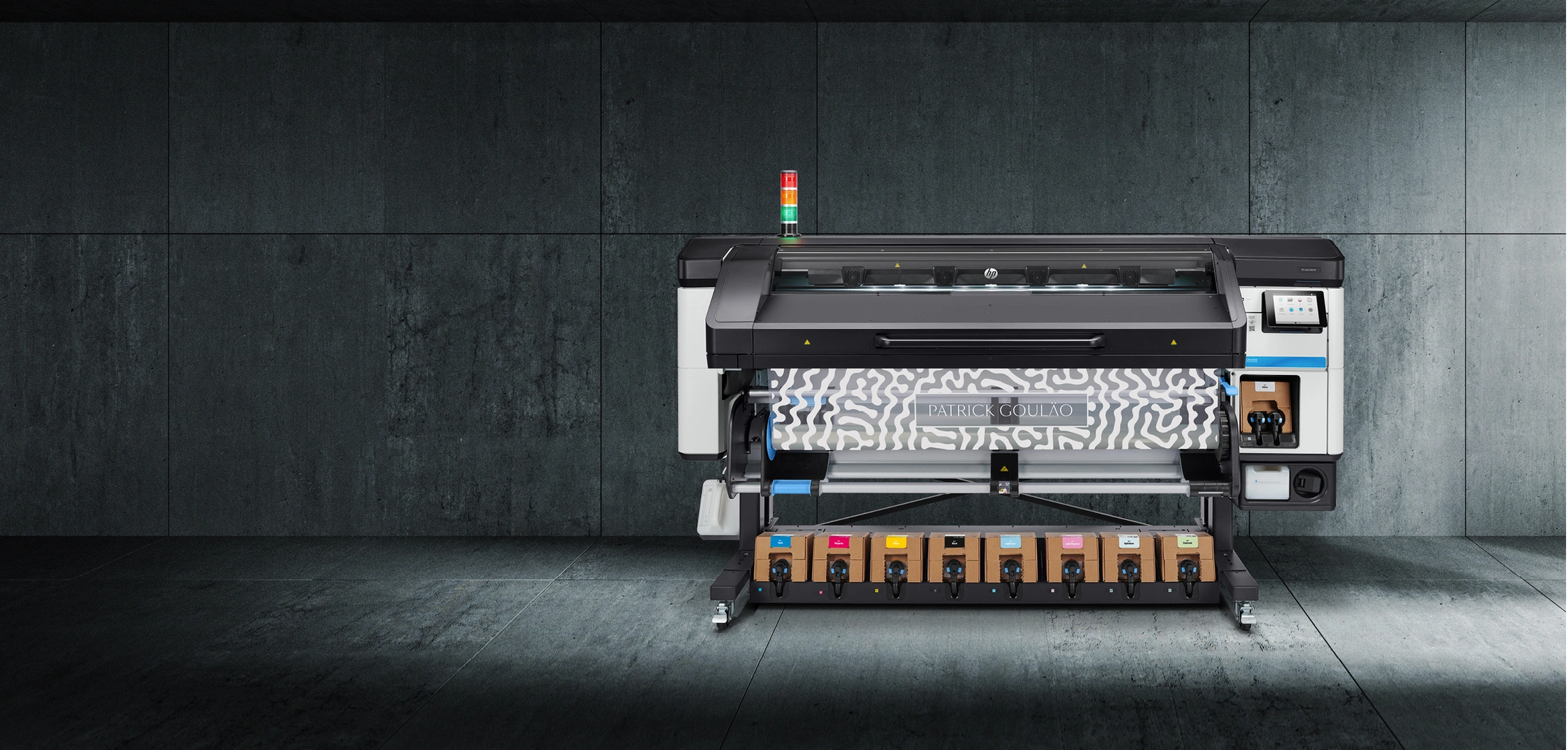
Choosing the right ink and the right printing tech
Introducing the HP Latex R Printer, HP Latex 700 W and 800 W Printers
THREE REASONS TO CONSIDER A LARGE FORMAT PRINTER WITH WHITE INK.
Footnotes
- Based on a research conducted by Keypoint Intelligence July 2020 and commissioned by HP, across over 100 print service providers across the U.S., Europe, and India.
- When HP White Latex Printheads are placed in the storage cassettes, no white ink is used for servicing when printheads are not in use.
- Whitest white based on HP Latex 700 W and 800 W Printers. Whitest white based on ISO/DIS 23498 compared to competitive alternatives using solvent and UV technologies under $50,000 USD as of May, 2020. Test performed on black opaque self-adhesive vinyl (L*:4.16 – a:0,48-b:2,34) with 160% UF printmode using HP 873 3-liter or HP 832 1-liter White Latex Ink Cartridges. Visual opacity = 91%.
- Resists yellowing over time based on internal HP WeatherOmeter testing October, 2017 with 1 dot-per-pixel HP Latex Overcoat, on a range of rigid and flexible unlaminated substrates. Yellowing based on L* and B* of white underflood samples. White ink capability may be optional, requiring purchase of the HP White Ink Option Kit.
- There is a broad set of media with very different odor profiles. Some of the media can affect the odor performance of the final print.
- No special ventilation equipment means air filtration systems are not required to meet U.S. OSHA requirements. Condensate collection systems are provided on some models. Special ventilation equipment installation is at the discretion of the customer—see the Site Preparation Guide for details. Customers should consult state and local requirements and regulations.
THREE REASONS TO CONSIDER A LARGE FORMAT PRINTER WITH WHITE INK.
Download our free brochure here Download our free brochure here
You Might Also Like
Say yes to big opportunities and bigger margins
What to consider to print sustainably

How to support employee wellbeing in the print industry

How HP PrintOS helped Benson stay agile

HP Latex Print and Cut Plus Solutions spotlight: Level-up your print operations

Why the print industry needs a sustainable edge

The 10 dos and don’ts of wayfinding floor signage
9 Essential Tips for Car Wrapping
Everything you need to know About HP Latex Inks

The 4 Wide-Format Application Trends You Need to Know

When You’re Choosing A Large-Format Printer, Always Ask About The Ink Cartridges
Think Print Isn’t Sustainable? Think again!
Everything you need to know About HP Latex Inks

Keeping up with a fast-moving retail market in vinyl graphics printing
Everything you need to know About HP Latex Inks
Key features to look for when buying a 24-inch printer plotter

Move Up The Value Chain With New Latex Printers
How Big Image Australia added versatility with HP Latex to inspire a new period of growth
How Intelligent Automation Can Help Print Businesses Work Smarter

“I’m Glad We Chose Sustainable Printing Early On” - How One Print Service Provider Survived Lockdown And Become More Sustainable, With HP Latex Printers
Select Your Country/Region and Language
Close Country/Region Selector Dialog
Europe, Middle East and Africa
- Africa
- Afrique
- België
- Belgique
- Česká republika
- Danmark
- Deutschland
- Eesti
- España
- France
- Hrvatska
- Ireland
- Italia
- Latvija
- Lietuva
- Magyarország
- Middle East
- Nederland
- Nigeria
- Norge
- Österreich
- Polska
- Portugal
- România
- Saudi Arabia
- Slovenija
- Slovensko
- South Africa
- Suisse
- Suomi
- Sverige
- Switzerland
- Türkiye
- United Kingdom
- Ελλάδα
- България
- Казахстан
- Србија
- Україна
- ישראל
- الشرق الأوسط
- المملكة العربية السعودية
Country/Region :
Close Country/Region Selector
SelectedUnited States
popUpSRBeginingLabelString
HP Worldwide
Select Your Country/Region and Language
Click or use the tab key to select your country
Close Country/Region Selector Dialog
- Africa
- Afrique
- América Central
- Argentina
- Asia Pacific
- Australia
- Bangladesh
- België
- Belgique
- Bolivia
- Brasil
- Canada
- Canada - Français
- Caribbean
- Česká republika
- Chile
- Colombia
- Danmark
- Deutschland
- Ecuador
- Eesti
- España
- France
- Hong Kong SAR
- Hrvatska
- India
- Indonesia
- Ireland
- Italia
- Latvija
- Lietuva
- Magyarország
- Malaysia
- México
- Middle East
- Nederland
- New Zealand
- Nigeria
- Norge
- Österreich
- Pakistan
- Paraguay
- Perú
- Philippines
- Polska
- Portugal
- Puerto Rico
- România
- Saudi Arabia
- Singapore
- Slovenija
- Slovensko
- South Africa
- Sri Lanka
- Suisse
- Suomi
- Sverige
- Switzerland
- Türkiye
- United Kingdom
- United States
- Uruguay
- Venezuela
- Việt Nam
- Ελλάδα
- България
- Казахстан
- Србија
- Україна
- ישראל
- الشرق الأوسط
- المملكة العربية السعودية
- ไทย
- 中华人民共和国
- 臺灣 地區
- 日本
- 香港特別行政區
- 한국
- Recalls |
- Product recycling |
- Accessibility |
- CA Supply Chains Act |
- Privacy |
- Use of cookies |
- Your privacy choices |
- Terms of use |
- Limited warranty statement |
- Terms & conditions of sales & service |
- IP Notices |
©2025 HP Development Company, L.P. The information contained herein is subject to change without notice.