


Blog
Grow Your Business By Transforming Your Traffic-Signage Production

Graphic Arts
|25 Nov 2020
The market for printed traffic signs is growing by 9.3% each year [1]. The rapid growth of the urban and suburban built environments — prompted by migration to cities in developing countries and flight to the suburbs in developed ones — is fueling a building boom, with the global construction sector set to grow by 35% a year [2].
These new built environments require roads to connect them. Add to this the need to communicate pandemic-related public-health information; the rise of new vehicle types, requiring specific information; and the growth of low-emission zones, and it’s clear why the market for road signs is set to grow for years to come.
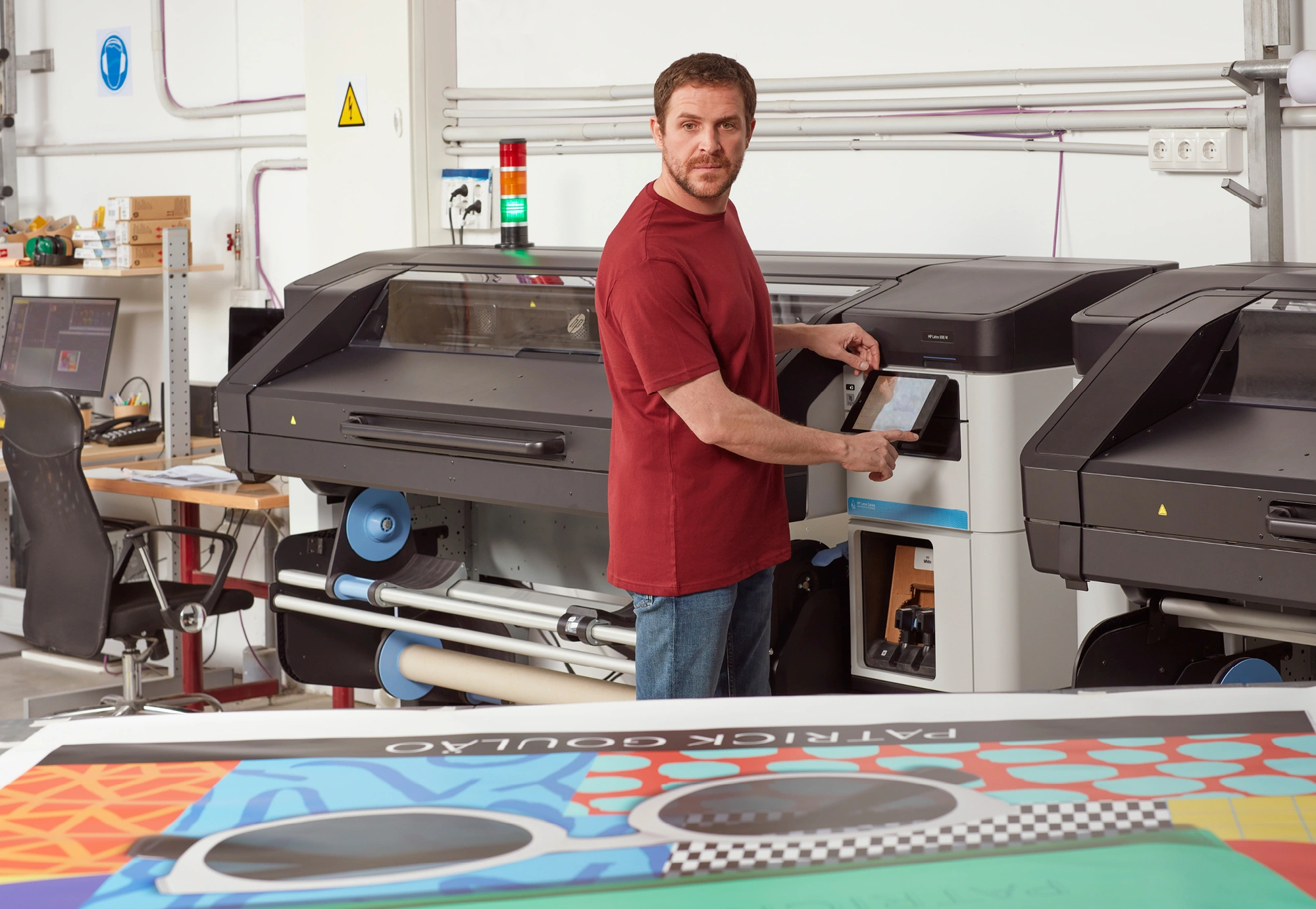
For print service providers (PSPs), the question is how to break into this lucrative and growing market. The answer is to use HP Latex printers, specifically designed to produce durable, bright and easy-to-read signs that you can produce on demand.
What to look for in a road-sign printer
Road signage may be produced in batches: think, for instance, of new public-health signage. Planning officers must ensure that the same information is reproduced in a memorable and easy-to-read form in many different locations, without variation. The same is true for standard traffic directions and other types of public information.
But increasingly there’s also a need for customization. Some signs have always required tailoring for their specific location or function. But in the move to push post-lockdown recovery, councils and other public bodies will need to promote local attractions. This requires custom signage.
A good road-sign printer should be able to accommodate both types of work: short-batch, fast-turnaround custom jobs and large runs of standardized signs. It should be easy to operate, allowing you to produce a finished sign in as few steps as possible.
To maintain margins and ensure the business runs efficiently, the ideal road-sign printer will have management features — which should be accessible remotely and at the machine itself. For instance, the system should give you timely ink and media alerts, should compile media-usage and productivity stats and should inform the operator of the status of the job, particularly when the operator is working remotely.
And, of course, the ideal road-sign printer should be able to product bright, durable traffic signs that are suitable for a wide range of applications. They should handle a wide range of colors and print on specialist materials such as reflective sheeting. Only in this way, can you serve the widest range of customers and address the widest range of use cases.
HP Latex printers for road-sign production
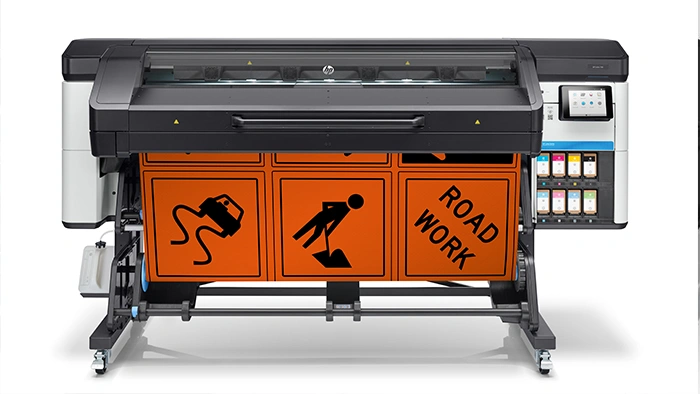
Getting started with latex road-sign printing

Download now
Transform your traffic signage production while opening up new business opportunities.
Footnotes
- https://www.marketsandmarkets.com/Market-Reports/road-safety-market-93636585.html
- https://www.icis.com/explore/resources/news/2020/09/11/10551509/global-construction-sector-to-grow-35-to-2030-on-urbanisation-softer-pandemic-impact
- For more details including durability performance according to defined printing guidelines, see: 3M™
Diamond Grade™ DG Reflective Sheeting Series 4000 series, 3M™ High-Intensity Prismatic Reflective
Sheeting Series 3930, 3M™ Diamond Grade™ VIP Reflective Sheeting Series 3990, 3M™ Engineer Grade
Prismatic Reflective Sheeting Series 3430, and 3M™ Diamond Grade™ Fluorescent Work Zone Sheeting
3924S Fluorescent Orange. - The digital HP Latex Printing Solution with 3M™ Reflective Sheeting for regulated traffic signage
applies to green, blue, brown, red, purple, black, and yellow colors. - HP Latex 700/800 printers cannot print traffic yellow, this color is not retroreflective enough to meet the traffic requirements.
- The HP Latex 1500 Printer operating at 3-pass, 6-colour, 90%.
- Applicable to HP Latex printers. No special ventilation equipment means air filtration systems are not required to meet U.S. OSHA requirements. Condensate collection systems are provided on some models. Special ventilation equipment installation is at the discretion of the customer—see the Site Preparation Guide for details. Customers should consult state and local requirements and regulations.
- For more information visit www.3M.com/trafficsignprinting
- HP Latex Inks were tested for Hazardous Air Pollutants, as defined in the Clean Air Act, per U.S. Environmental Protection Agency Method 311 (testing conducted in 2013) and none were detected.
- There is a broad set of media with very different odor profiles. Some of the media can affect the odor performance of the final print.
- The ink cartridge HP Eco-Carton outer carton is 100% recyclable through local cardboard/paper programs. Inner materials including the ink bag are 55% recyclable and can be returned free of charge to the HP Planet Partners program for reprocessing of plastic parts. Zero landfill. For ink bag and printhead take back, visit http://www.hp.com/recycle to see how to participate and for HP Planet Partners program availability; program may not be available in your jurisdiction. Where this program is not available, and for other consumables not included in the program, consult your local waste authorities on appropriate disposal.
Transform your traffic signage production while opening up new business opportunities.
Download now Download now
You Might Also Like

Say yes to big opportunities and bigger margins

What to consider to print sustainably

How to support employee wellbeing in the print industry

How HP PrintOS helped Benson stay agile

HP Latex Print and Cut Plus Solutions spotlight: Level-up your print operations

Why the print industry needs a sustainable edge

The 10 dos and don’ts of wayfinding floor signage

9 Essential Tips for Car Wrapping

With White Ink, You Can Print Your Way To Higher Margins

The 4 Wide-Format Application Trends You Need to Know

Keeping up with a fast-moving retail market in vinyl graphics printing
Think Print Isn’t Sustainable? Think again!
Everything you need to know About HP Latex Inks
Everything you need to know About HP Latex Inks
Everything you need to know About HP Latex Inks

When You’re Choosing A Large-Format Printer, Always Ask About The Ink Cartridges

Move Up The Value Chain With New Latex Printers
How Big Image Australia added versatility with HP Latex to inspire a new period of growth
How Intelligent Automation Can Help Print Businesses Work Smarter

“I’m Glad We Chose Sustainable Printing Early On” - How One Print Service Provider Survived Lockdown And Become More Sustainable, With HP Latex Printers
Select Your Country/Region and Language
Close Country/Region Selector Dialog
Europe, Middle East and Africa
- Africa
- Afrique
- België
- Belgique
- Česká republika
- Danmark
- Deutschland
- Eesti
- España
- France
- Hrvatska
- Ireland
- Italia
- Latvija
- Lietuva
- Magyarország
- Middle East
- Nederland
- Nigeria
- Norge
- Österreich
- Polska
- Portugal
- România
- Saudi Arabia
- Slovenija
- Slovensko
- South Africa
- Suisse
- Suomi
- Sverige
- Switzerland
- Türkiye
- United Kingdom
- Ελλάδα
- България
- Казахстан
- Србија
- Україна
- ישראל
- الشرق الأوسط
- المملكة العربية السعودية
Country/Region :
Close Country/Region Selector
SelectedUnited States
popUpSRBeginingLabelString
HP Worldwide
Select Your Country/Region and Language
Click or use the tab key to select your country
Close Country/Region Selector Dialog
- Africa
- Afrique
- América Central
- Argentina
- Asia Pacific
- Australia
- Bangladesh
- België
- Belgique
- Bolivia
- Brasil
- Canada
- Canada - Français
- Caribbean
- Česká republika
- Chile
- Colombia
- Danmark
- Deutschland
- Ecuador
- Eesti
- España
- France
- Hong Kong SAR
- Hrvatska
- India
- Indonesia
- Ireland
- Italia
- Latvija
- Lietuva
- Magyarország
- Malaysia
- México
- Middle East
- Nederland
- New Zealand
- Nigeria
- Norge
- Österreich
- Pakistan
- Paraguay
- Perú
- Philippines
- Polska
- Portugal
- Puerto Rico
- România
- Saudi Arabia
- Singapore
- Slovenija
- Slovensko
- South Africa
- Sri Lanka
- Suisse
- Suomi
- Sverige
- Switzerland
- Türkiye
- United Kingdom
- United States
- Uruguay
- Venezuela
- Việt Nam
- Ελλάδα
- България
- Казахстан
- Србија
- Україна
- ישראל
- الشرق الأوسط
- المملكة العربية السعودية
- ไทย
- 中华人民共和国
- 臺灣 地區
- 日本
- 香港特別行政區
- 한국
- Recalls |
- Product recycling |
- Accessibility |
- CA Supply Chains Act |
- Privacy |
- Use of cookies |
- Your privacy choices |
- Terms of use |
- Limited warranty statement |
- Terms & conditions of sales & service |
- IP Notices |
©2025 HP Development Company, L.P. The information contained herein is subject to change without notice.