Blog
Everything you need to know About HP Latex Inks
Graphic Arts
|25 Nov 2020
Find out how our versatile HP Latex Inks can help you deliver sustainable, high-quality print solutions to customers.
Print professionals need a better way
Customers and businesses are demanding more from their prints than ever before, and it falls on print businesses to keep up with these evolving expectations. They need a better solution: one that’s durable, provides versatile media options, and is fast to print.
การเลือกหมึกและเทคโนโลยีการพิมพ์ที่เหมาะสม
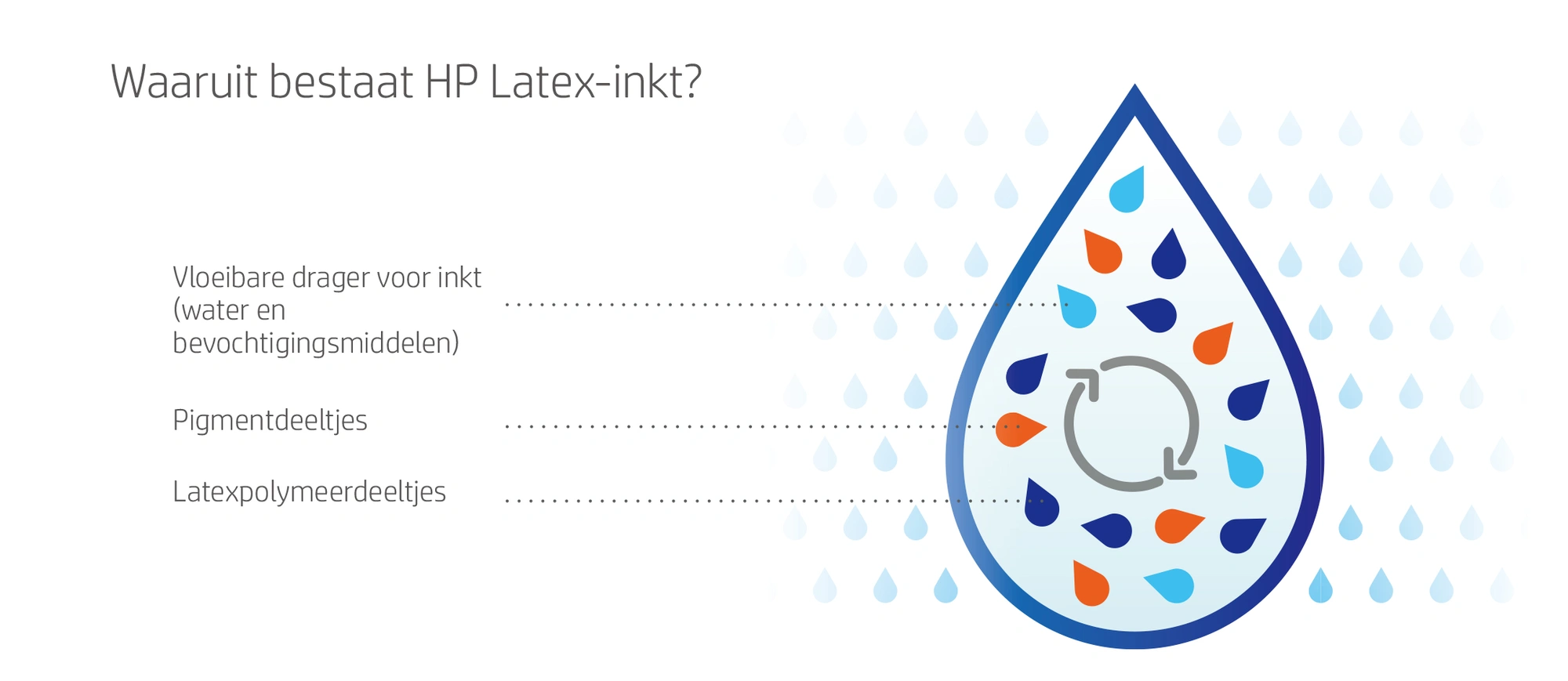
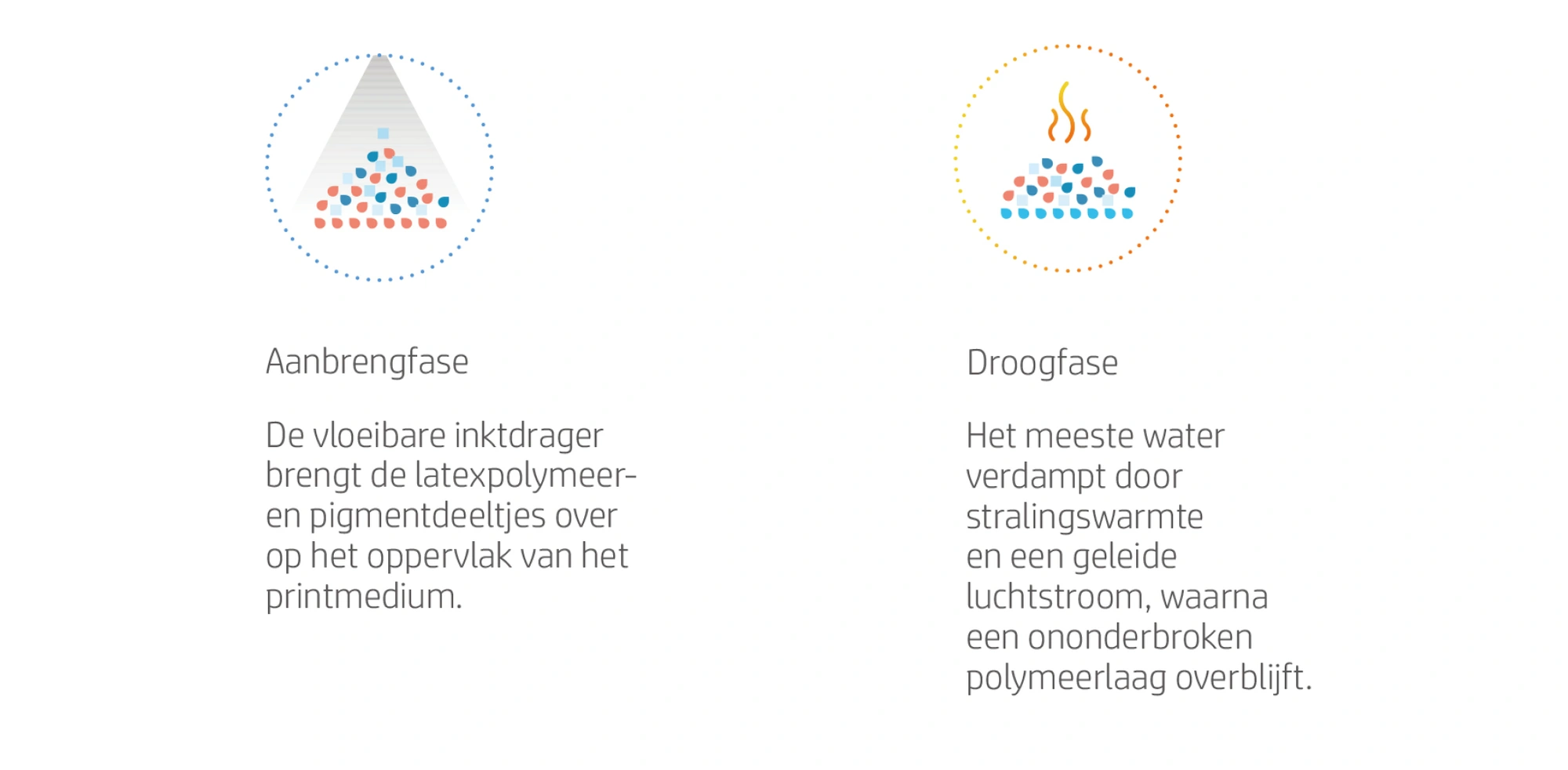
The liquid ink vehicle is mostly made up of water, a wetting agent, and a humectant (a substance that prevents moisture from escaping the mixture).
This vehicle is needed for printhead reliability, and a similar compound is found in all sorts of printers—from the ones in your home to industrial presses. It carries the pigment particles (pink) and latex polymer (dark blue) through the printheads and onto the substrate, where theythen form your desired image.
THE UNIQUE TWO-STEP PROCESS
SO, WHAT’S THE RESULT?
How HP Latex Inks perform in the real world
How can HP Latex inks improve versatility across real world applications?
Our inks have been designed to perform both indoors and outdoors and withstand physical and chemical damage. But don’t just take our word for it: HP Latex Inks have been independently certified by industry-leading labs to deliver outstanding health, safety, and environmental performance. Here’s how you can meet your goals and deliver better products for your customers.

Deliver confidence in your sustainability credentials
The businesses you work with—and importantly, the end users they deliver to—are focusing on their environmental impact more than ever before. Many are now rolling out ambitious sustainability roadmaps, and they’re thinking more carefully about where their printed media comes from.
OUR CERTIFICATIONS
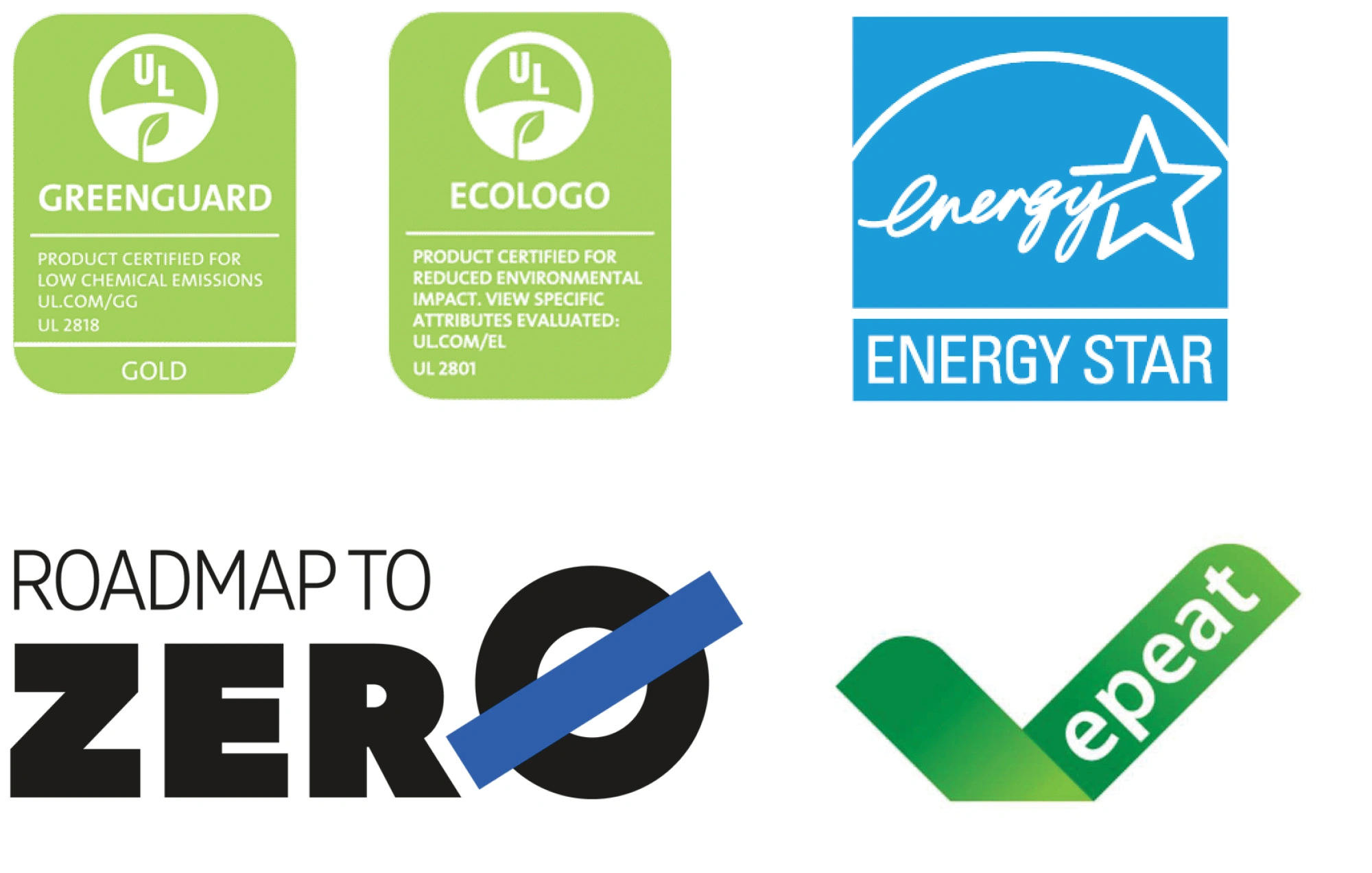
The latest generation of HP Latex Inks are UL ECOLOGO certified <sup>5</sup>, which means they meet a range of stringent environmental performance standards and human health criteria, and are also UL GREENGUARD Gold certified.
In addition, HP Latex Inks are fully compatible with a range of FSC-certified papers and PVC-free solutions,6 which offer alternatives to the use of problematic plastics in print.
Our HP Latex 700 and 800 Printer series inks are ENERGY STAR accredited for their energy efficiency. Their chemical composition is certified by the Zero Discharge of Hazardous
Chemicals Foundation (ZDHC) and meet the standards of its Manufacturing Restricted Substances List (ZDHC MRSL), ensuring safe disposal of both ink cartridges and
printed products.
The Electronic Product Environmental Assessment Tool (EPEAT) is a procurement certification that helps purchasers choose products that align with their environmental goals.
All printers in the HP Latex range are EPEAT-registered (where supported), so our customers can compare printer performance against widely-recognized sustainability criteria.
To learn more about HP Latex’s environmental certifications, visit our Sustainable Printing page.
Health and safety is a growing concern
ADDRESSING THE RISKS
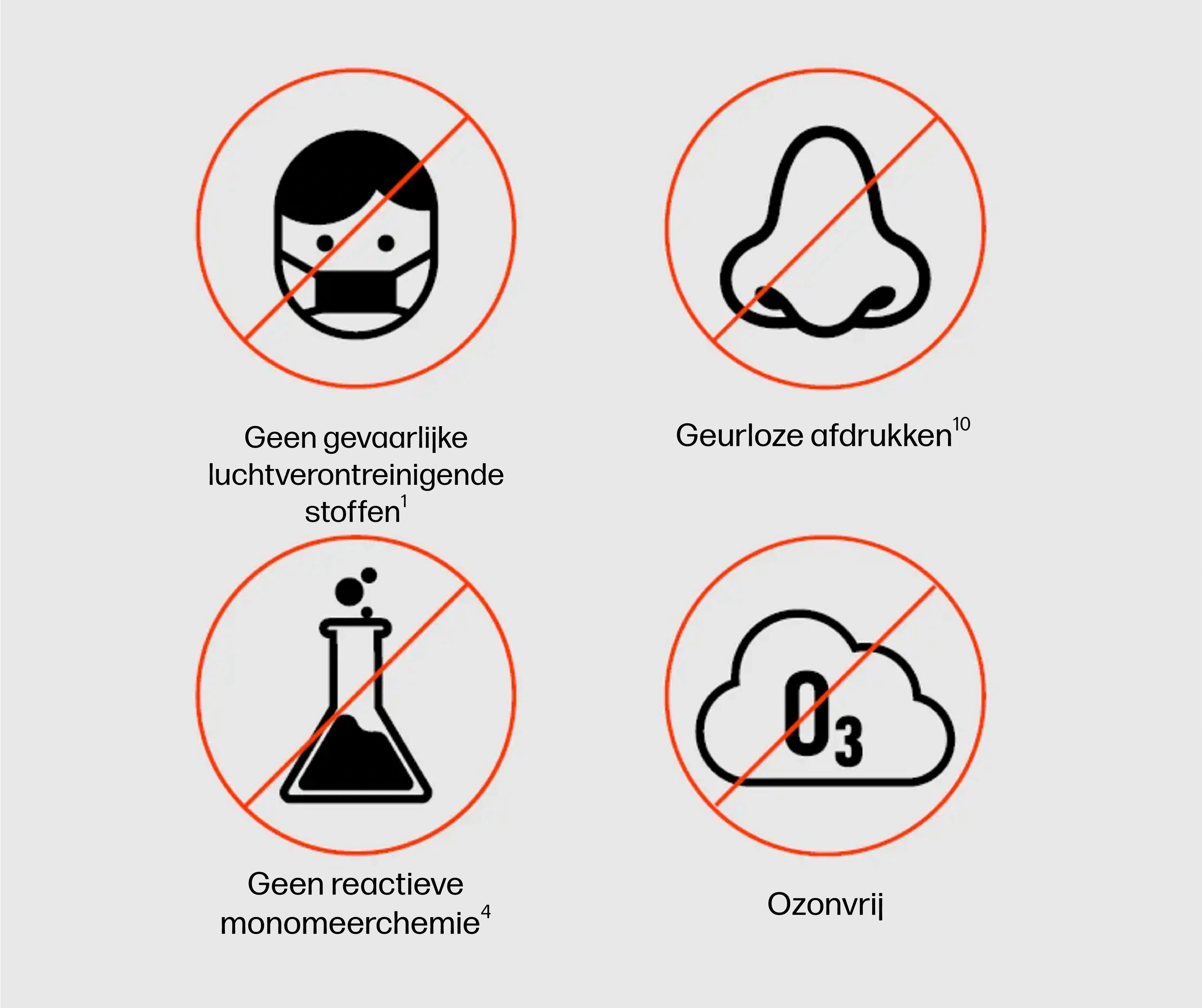
The latest water-based HP Latex Inks are designed to avoid the hazards associated with solvent, eco-solvent, and UV inks, and their low emitting prints give them a major advantage over traditional solutions. Their odorless10 prints make them ideal for practical applications in sensitive areas—including education and healthcare facilities.
HP Latex Inks meet indoor air quality standards for low chemical emissions during print usage. They are UL GREENGUARD Gold certified5 low emitting as ‘Unrestricted’ for a fully decorated room 33.4 m2 (360 ft2) in an office environment and 94.6m2 (1,018 ft2) in a classroom environment.
Prints produced using HP Latex Inks on HP PVC-free wallpaper meet AgBB criteria for health-related evaluations of VOC emissions of indoor building products. They are also rated
A+ (very low emission) according to the “Émissions dans l’air intérieur” statement on the level of volatile substances in indoor air.
Customers need durable solutions

Durability is the ability to withstand wear and tear from different sources of degradation when prints are exposed to various environmental conditions. There are three key components that make a product durable: light-fade resistance, scratch and abrasion resistance, and water and chemical resistance.
LIGHT-FADE RESISTANCE
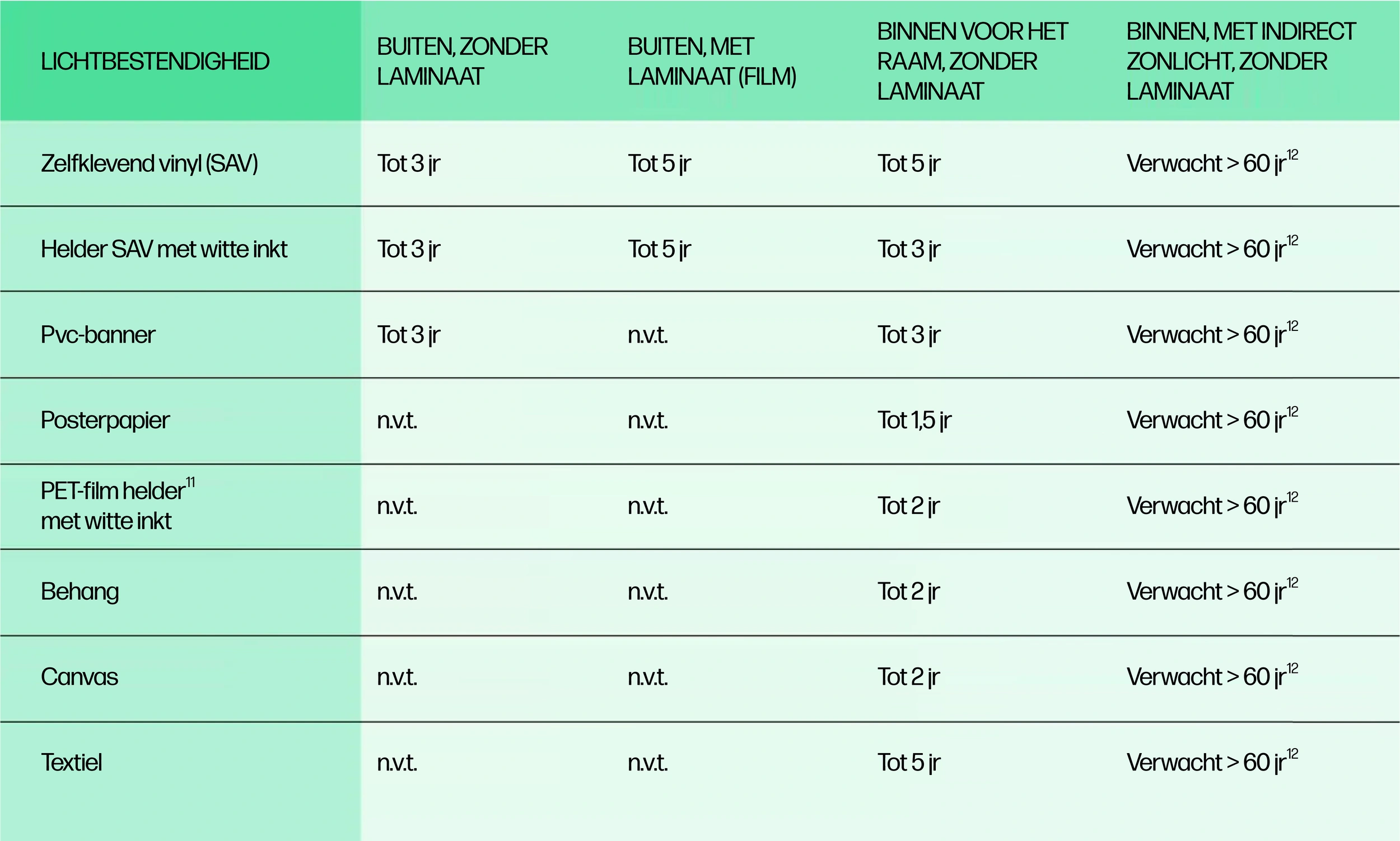
Light-fade resistance, sometimes referred to as print permanence, is a measure of how well a print resists fading with exposure to light and other environmental factors such as ozone. The color of an ink comes from its dyes or pigments, and over time these particles will be broken down by UV rays in sunlight, resulting in colors that fade.
In the table below, we’ve highlighted the expected life of prints produced with our HP Latex 700 and 800 Printer series inks, so you can visualize how these would stand up in a typical business, retail, or education setting.
SCRATCH AND ABRASION RESISTANCE
Scratch and abrasion resistance refers to a print’s resistance to damage from different objects with which it comes into contact.
Scratch damage refers specifically to damage from sharp or pointed objects—fingernails, for example. This is a very important consideration for high-value prints that will be
viewed at short distances since a single scratch can occur in an instant and permanently damage a print. Additionally, once they’ve been damaged, the print could be prone to further peeling and degradation.
At HP, we perform all our scratch and abrasion testing with a taber tester, calibrated to industry-standard levels.
Abrasion (also called dry rub) refers to damage caused by repeated rubbing in the same location. This is an important consideration for mid-to-long-term graphics that will be handled frequently.
WATER AND CHEMICAL RESISTANCE
Water and chemical resistance refers to the ability of a graphic to resist water, cleaning products, and other chemicals. For example, graphics in some indoor locations may be cleaned with water and other detergents, and vehicle graphics undergo frequent washing or sporadic fuel spills. To test performance in this area, HP performs wet rub testing
with water, as well as a common cleaning product—Windex® window cleaner.
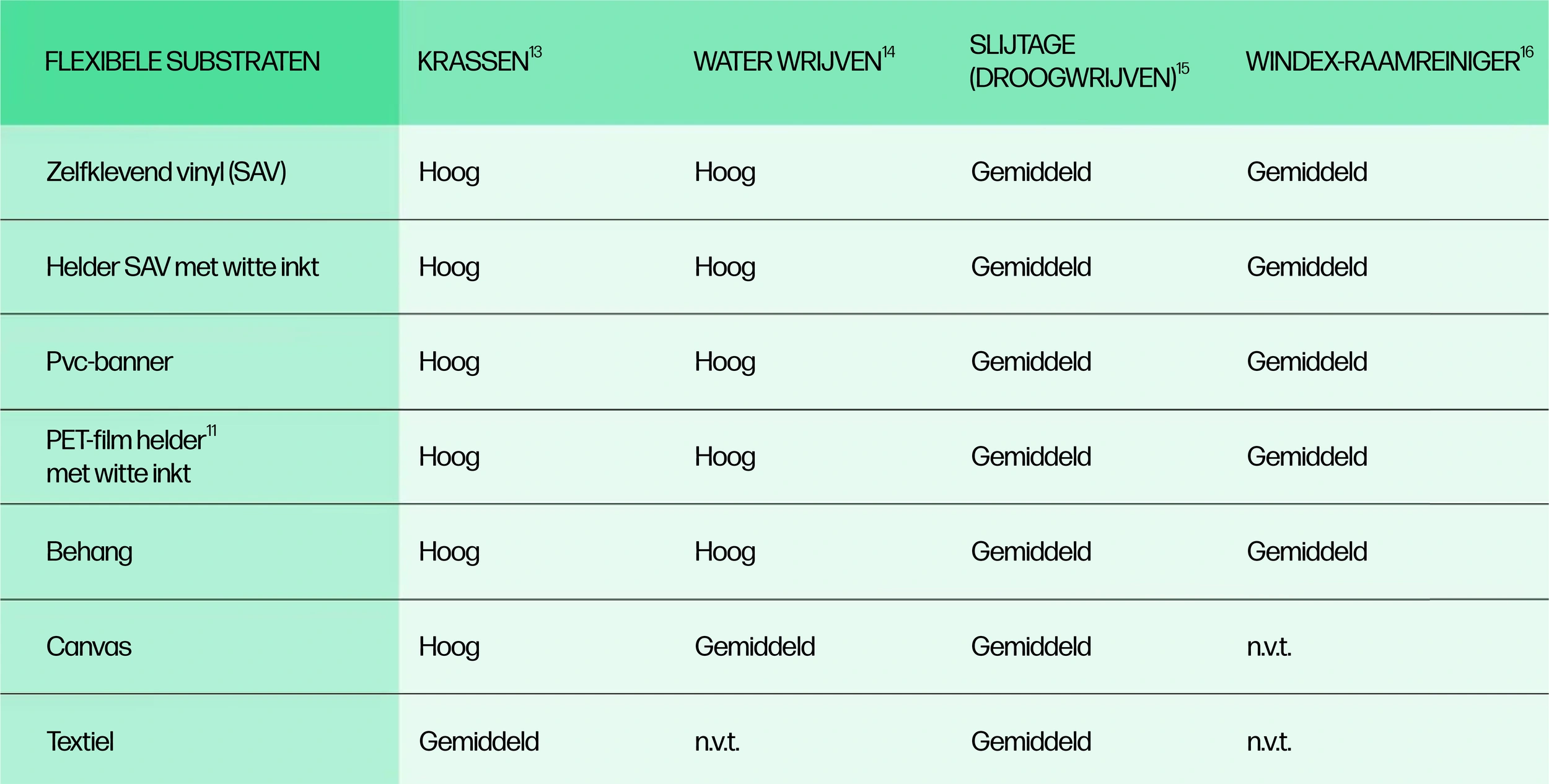
In the table below, you can see how HP Latex Inks resist scratch, abrasion, water, and chemical cleaner damage. Once again, we performed these tests on materials that had been printed on with HP Latex 700 and 800 series inks. The following results are an average of all the materials tested, and reflect the most common behaviors, so you can understand how they perform in a typical real-world environment.
เชิงอรรถ
You Might Also Like
Say yes to big opportunities and bigger margins
What to consider to print sustainably

How to support employee wellbeing in the print industry

How HP PrintOS helped Benson stay agile

HP Latex Print and Cut Plus Solutions spotlight: Level-up your print operations

The 10 dos and don’ts of wayfinding floor signage
9 Essential Tips for Car Wrapping

Keeping up with a fast-moving retail market in vinyl graphics printing
ต่อไปนี้คือแนวทางในการตอบสนองต่ออุปสงค์ที่เพิ่มขึ้นในด้านบรรจุภัณฑ์ที่ปรับแต่งเฉพาะ
Key features to look for when buying a 24-inch printer plotter
ยกระดับของห่วงโซ่คุณค่าไปกับเครื่องพิมพ์ลาเท็กซ์รุ่นใหม่
How Big Image Australia added versatility with HP Latex to inspire a new period of growth
การควบคุมความแม่นยำสำหรับการพิมพ์แบบแปลนขนาดใหญ่
Everything you need to know About HP Latex Inks

แนวโน้มการประยุกต์ใช้งานพิมพ์หน้า กว้าง 4 ประการที่คุณต้องรู้
หากคุณจะเลือกซื้อเครื่องพิมพ์หน้ากว้าง ให้สอบถามรายละเอียดเกี่ยวกับตลับหมึกพิมพ์เสมอ
Everything you need to know About HP Latex Inks
การทํางานร่วมกันอย่างยืดหยุ่น

การทํางานจากระยะไกลอย่างราบรื่น
Everything you need to know About HP Latex Inks
เลือกประเทศ/ภูมิภาคและภาษาของคุณ
ปิดกล่องเลือกประเทศ/ภูมิภาค
สำหรับกลุ่มประเทศยุโรปตะวันออก ตะวันออกกลาง และแอฟริกา
- Africa
- Afrique
- België
- Belgique
- Česká republika
- Danmark
- Deutschland
- Eesti
- España
- France
- Hrvatska
- Ireland
- Italia
- Latvija
- Lietuva
- Magyarország
- Middle East
- Nederland
- Nigeria
- Norge
- Österreich
- Polska
- Portugal
- România
- Saudi Arabia
- Slovenija
- Slovensko
- South Africa
- Suisse
- Suomi
- Sverige
- Switzerland
- Türkiye
- United Kingdom
- Ελλάδα
- България
- Казахстан
- Србија
- Україна
- ישראל
- الشرق الأوسط
- المملكة العربية السعودية
ประเทศ/ภูมิภาค :
ปิดตัวเลือกประเทศ/ภูมิภาค
ที่เลือกไทย
popUpSRBeginingLabelString
HP ในทุกมุมโลก
เลือกประเทศ/ภูมิภาคและภาษาของคุณ
คลิกหรือใช้ปุ่มเลื่อนระยะ (Tab Key) เพื่อเลือกประเทศของคุณ
ปิดกล่องเลือกประเทศ/ภูมิภาค
- Africa
- Afrique
- América Central
- Argentina
- Asia Pacific
- Australia
- Bangladesh
- België
- Belgique
- Bolivia
- Brasil
- Canada
- Canada - Français
- Caribbean
- Česká republika
- Chile
- Colombia
- Danmark
- Deutschland
- Ecuador
- Eesti
- España
- France
- Hong Kong SAR
- Hrvatska
- India
- Indonesia
- Ireland
- Italia
- Latvija
- Lietuva
- Magyarország
- Malaysia
- México
- Middle East
- Nederland
- New Zealand
- Nigeria
- Norge
- Österreich
- Pakistan
- Paraguay
- Perú
- Philippines
- Polska
- Portugal
- Puerto Rico
- România
- Saudi Arabia
- Singapore
- Slovenija
- Slovensko
- South Africa
- Sri Lanka
- Suisse
- Suomi
- Sverige
- Switzerland
- Türkiye
- United Kingdom
- United States
- Uruguay
- Venezuela
- Việt Nam
- Ελλάδα
- България
- Казахстан
- Србија
- Україна
- ישראל
- الشرق الأوسط
- المملكة العربية السعودية
- ไทย
- 中华人民共和国
- 臺灣 地區
- 日本
- 香港特別行政區
- 한국
- การเรียกคืนสินค้า |
- การรีไซเคิลผลิตภัณฑ์ |
- การเข้าใช้งาน |
- ความเป็นส่วนตัว |
- เงื่อนไขการใช้งาน |
- คุกกี้และตัวเลือกโฆษณา |
©2025 HP Development Company, L.P. ข้อมูลที่ปรากฏอยู่ ณ ที่นี้อาจมีการเปลี่ยนแปลงได้โดยไม่ต้องแจ้งให้ทราบ