Blog
The Key Benefits of Large Format Printing for Spatial Data in GIS

Pencetakan Teknis
|3 abr 2024
Geographic information systems (GIS) are incredibly broad and complex, with numerous applications for a wide range of industries. Most GIS functions depend on robust spatial data. This data represents the position of objects in space and how they relate to each other and their surroundings (as well as certain non-geographical data). Spatial data in GIS projects also helps with planning and analysis.
Doing so effectively further requires keen use of spatial data visualisation techniques. Like many graphical AEC and land-planning purposes, large format printing is an indispensable means of presenting spatial data and making GIS plans more engaging.
What Is Spatial Data in GIS?
Spatial data, broadly, refers to any information that directly relates to a geometrical space or, most commonly, geographical areas. There are many types of spatial data in GIS, ranging from simple geographic coordinates to elaborate, photo-realistic modelling and aerial photography.
While mapping is one of the main applications, spatial data can also relate to functions as broad as:
- Analysing geographical patterns
- Correlating geographical data with historical, weather, and other contextual data
- Remote sensing objects for spatial analysis (as with the "Internet of Things")
- Transportation and logistics
Advances in spatial data mining and visualisation software have dramatically expanded sources for GIS data. Modern spatial data structures in GIS must often consolidate an extremely broad range of geospatial, temporal, graphical, and other information. These data points come from maps, drones, satellites, signalling devices, weather stations, and much more,
All these functions share an ongoing need to consolidate and present such data in the clearest, most vivid, and most precise way. The breadth involved also underlines the importance of accommodating the widest possible range of spatial data in GIS large format printing.
Understanding Different Spatial Data Types and Structures in GIS
What Is Spatial Data Visualisation, and Why Is it Important?
Spatial data visualisation is any graphical depiction of spatial data in GIS applications. Options include maps, travel and logistics, and any correlating data (to cite just several examples out of an almost infinite amount). Some spatial data visualisation methods are application-specific, such as real-time traffic reporting. But others are more generic and accommodate a wider range of spatial data types.
How Large Format Printing Contributes to Spatial Data Visualisation
The vast majority of work that goes into interpreting spatial data structures in GIS must eventually be distilled into an accurate graphical representation. As sophisticated as digital GIS visualisations have become, numerous spatial data applications depend on large format prints.
Large format printing makes it much easier to exchange and reference GIS data, free of technological barriers or clunky screen navigation. Because spatial data types in GIS vary widely, it's important that your large format printer effectively displays:
- Geospatial coordinates and other raster data points with pinpoint precision
- Circular arcs and vector lines with the absolute least possible amount of "pixelation"
- Ultra-high-resolution satellite and aerial photography
- Maximum accuracy between RGB and CMYK colour formats to translate screen graphics to hard-copy visualisations
Is Large Format Printing the Best Way to Visualise Spatial Data in GIS?
Large format printing is one of two main formats for visualising spatial data. The other is, most broadly, digital displays. This, in turn, includes many other methods like fixed images, auto-updating records, and interactive graphical models.
No one visualisation method is "the best" except within the context of each particular purpose. It's far better to determine which type of spatial data visualisation is most suitable for a given application.
That said, large format printing is generally preferred when the spatial data is finalised and the technicians and/or stakeholders require a tangible and consistent point of reference. Physical prints also create a more professional image. Sensitive data is much easier to secure with physical copies than digital files (especially on networks).
Three Keystone Benefits of Using Large Format Printing for Spatial Data
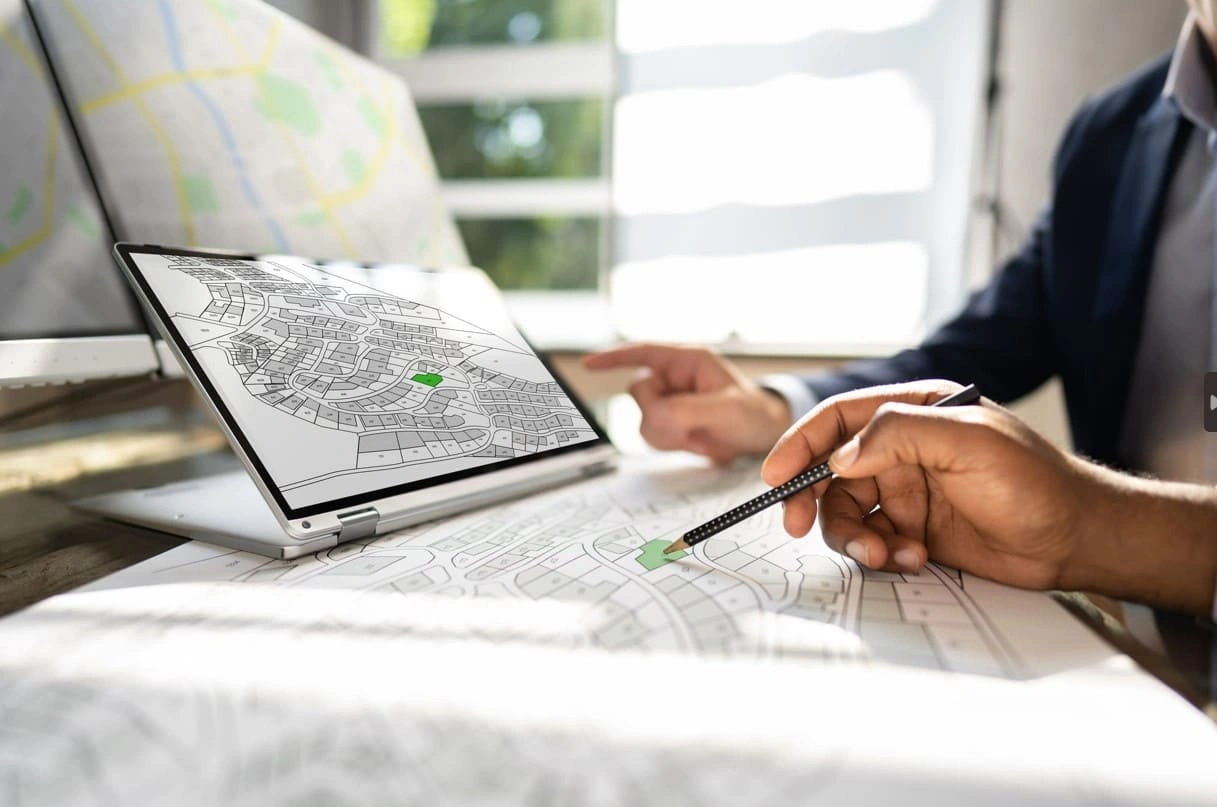
Large format printing is one of the most effective ways to improve data visualisation, communication, and decision-making among GIS professionals and their industry partners. Higher-quality prints not only improve accuracy and planning but directly translate to higher KPIs and accelerated growth.
Benefit 1: Enhanced Visualisation
High-Resolution Maps, Charts, and Diagrams
Clear and Detailed Representation of Complex Spatial Patterns
Benefit 2: Improved Communication and Collaboration
Tangible and Visually Engaging Representations of Spatial Data
More Effective Presentations, Public Consultations, and Stakeholder Engagement
Better Understanding and Buy-In for GIS Projects
Benefit 3: Enhanced Decision-Making
Gain Deeper Insights Into Spatial Data
Better Decisions Made on Land-Use Planning, Infrastructure Development, and Environmental Management
Easy-to-Comprehend Spatial Information for Non-Technical Audiences
More Data-Driven Decisions
Reach Out to HP With Your GIS Spatial Data Printing Needs
Spatial data in GIS applications can be extremely complex, involving many layers of context-dependent data from virtually unlimited sources. By centering your GIS workflows around enterprise-grade large format printers, you'll secure greater long-term consistency and clarity of vision on even the most complex GIS projects.
Contact an HP sales expert for guidance in selecting the most appropriate large format printer technology, and experience the benefits of displaying your spatial GIS projects with impeccable accuracy in full, vivid detail.
Download our eBook now and discover how innovation is streamlining workflows, producing prints of unmatched quality and increasing IT efficiency like never before.
<iframe src="undefined"></iframe>You Might Also Like

Everything you need to know about choosing a plotter printer

Best Compact Large Format Printers for Small Business Offices

How to Choose the Best Industrial Plotter for Your AEC Business

Best Budget Plotter Printers for Small Business Print Shops

Which to Pick: Plotter or Laser Printers for Technical Drawings

Main Trends in the Technical Printing Sector in 2024

Top 7 Professional Large Format Printers to Buy in 2024

Get Photo-Quality Prints With a Large-Scale Colour Plotter Printer

Considerations to Help You Get the Right Digital Blueprint Printing Machine for Your AEC Business

10 Creative Uses for Large Format Poster Printers

5 Ways a Large Format Printer Can Streamline Your Business Workflow

Plotters and Their Types: Uncovering Plotter Cost Considerations

Everything You Need to Know About Plotters and Their Applications

Optimising Printer and Plotter Capabilities for Small Businesses

Uses of Plotters for Small Businesses: Affordable Solutions for Big Impact

How to Print a Poster With HP's DesignJet T850 Printer

5 Factors to Consider When Buying an Inkjet Plotter

The Best Plotter Printers for Creating GIS Map Systems

Latest Innovations in Printing Technology: Top 5 Uses of Large Format Printers in the Construction Sector

How to Choose the Best Plotter Printer Scanner for Printing Documents & Reproducing Designs
Pilih Negara/Wilayah dan Bahasa Anda
Tutup Dialog Pemilih Negara/Wilayah
Eropa, Timur Tengah dan Afrika
- Africa
- Afrique
- België
- Belgique
- Česká republika
- Danmark
- Deutschland
- Eesti
- España
- France
- Hrvatska
- Ireland
- Italia
- Latvija
- Lietuva
- Magyarország
- Middle East
- Nederland
- Nigeria
- Norge
- Österreich
- Polska
- Portugal
- România
- Saudi Arabia
- Slovenija
- Slovensko
- South Africa
- Suisse
- Suomi
- Sverige
- Switzerland
- Türkiye
- United Kingdom
- Ελλάδα
- България
- Казахстан
- Србија
- Україна
- ישראל
- الشرق الأوسط
- المملكة العربية السعودية
Negara/Wilayah:
Tutup Pemilih Negara/Wilayah
DipilihIndonesia
popUpSRBeginingLabelString
HP di Seluruh Dunia
Pilih Negara/Wilayah dan Bahasa Anda
Klik atau gunakan tombol tab untuk memilih negara Anda
Tutup Dialog Pemilih Negara/Wilayah
- Africa
- Afrique
- América Central
- Argentina
- Asia Pacific
- Australia
- Bangladesh
- België
- Belgique
- Bolivia
- Brasil
- Canada
- Canada - Français
- Caribbean
- Česká republika
- Chile
- Colombia
- Danmark
- Deutschland
- Ecuador
- Eesti
- España
- France
- Hong Kong SAR
- Hrvatska
- India
- Indonesia
- Ireland
- Italia
- Latvija
- Lietuva
- Magyarország
- Malaysia
- México
- Middle East
- Nederland
- New Zealand
- Nigeria
- Norge
- Österreich
- Pakistan
- Paraguay
- Perú
- Philippines
- Polska
- Portugal
- Puerto Rico
- România
- Saudi Arabia
- Singapore
- Slovenija
- Slovensko
- South Africa
- Sri Lanka
- Suisse
- Suomi
- Sverige
- Switzerland
- Türkiye
- United Kingdom
- United States
- Uruguay
- Venezuela
- Việt Nam
- Ελλάδα
- България
- Казахстан
- Србија
- Україна
- ישראל
- الشرق الأوسط
- المملكة العربية السعودية
- ไทย
- 中华人民共和国
- 臺灣 地區
- 日本
- 香港特別行政區
- 한국
- Penarikan |
- Daur Ulang Produk |
- Aksesibilitas |
- Privasi |
- Ketentuan penggunaan |
- Limited warranty statement |
- Cookie & Pilihan Iklan |
- HP Kini dengan TKDN |
©2026 HP Development Company, L.P. Informasi dalam dokumen ini dapat berubah tanpa pemberitahuan sebelumnya.